To find micro-influencers (1K–100K followers), use specialized influencer discovery platforms. If you only need to filter by follower count, any platform with a basic audience size filter will work. But if you also care about location, niche, or audience geography, you’ll need a more advanced platform, for example, HypeAuditor.
Micro-influencers often create a stronger sense of connection between brands and everyday audiences. Their communities are small enough for real conversations to happen, which makes their opinions feel personal and trustworthy. This closeness helps brands appear more genuine in the eyes of consumers, especially when the product or service fits naturally into the influencer’s daily life.
Working with several micro-influencers can also make a campaign more adaptive. Instead of focusing on one large name, brands can collaborate with multiple creators who represent different audience segments. This approach helps spread awareness while keeping the tone authentic across various communities.
Because there are so many micro-influencers, choosing the right ones takes precision. Using influencer marketing platforms with advanced search and analytics features helps brands focus on quality over quantity. These tools reveal crucial details like audience location, engagement quality, and content relevance, which helps make sure every collaboration actually reaches the right people.
“Micro-influencers make up a huge part of the creator economy - over 13% on Instagram and almost 15% on YouTube. There are so many of them that finding the right fit takes more than scrolling through profiles. You need data to narrow it down to the ones who really connect with your audience.”

Nick Baklanov
Marketing Intelligence Analyst at HypeAuditor
Best methods to surface micro-influencers
1. Use influencer discovery platforms
Start with professional platforms designed specifically for creator search.
In HypeAuditor, you can search through 200M+ creator database across Instagram, TikTok, YouTube, Twitch, Twitter (X), and Snapchat.
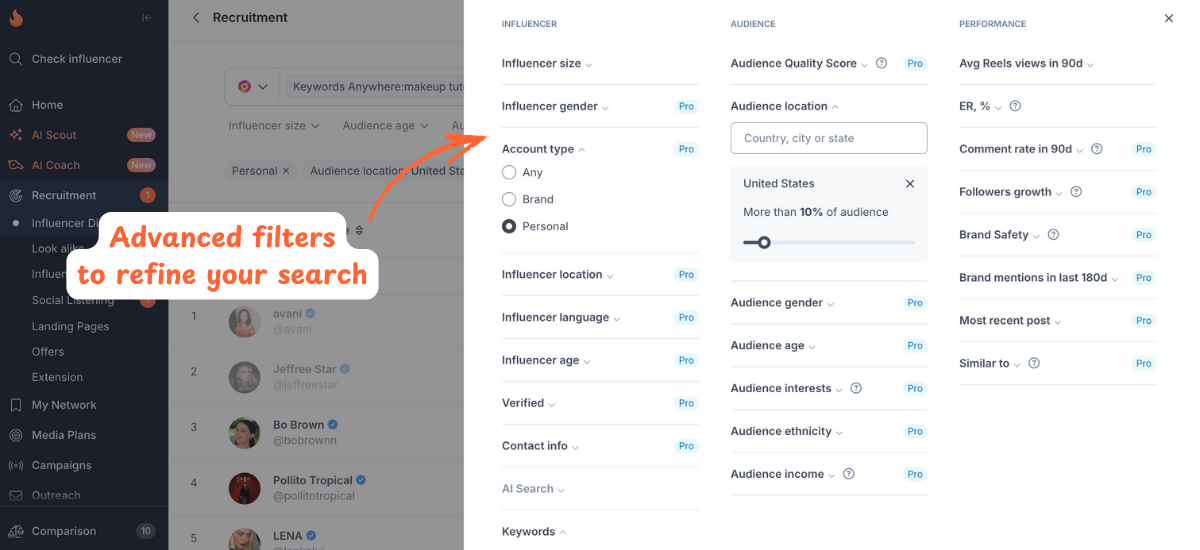
To make this search more efficient, you can use our Influencer Discovery tool, which includes 27 advanced filters. They allow you to refine results based on both creator attributes (follower range, platform, country, and account type) and audience characteristics (demographics, geolocation, and interests), as well as performance metrics such as engagement and follower growth.
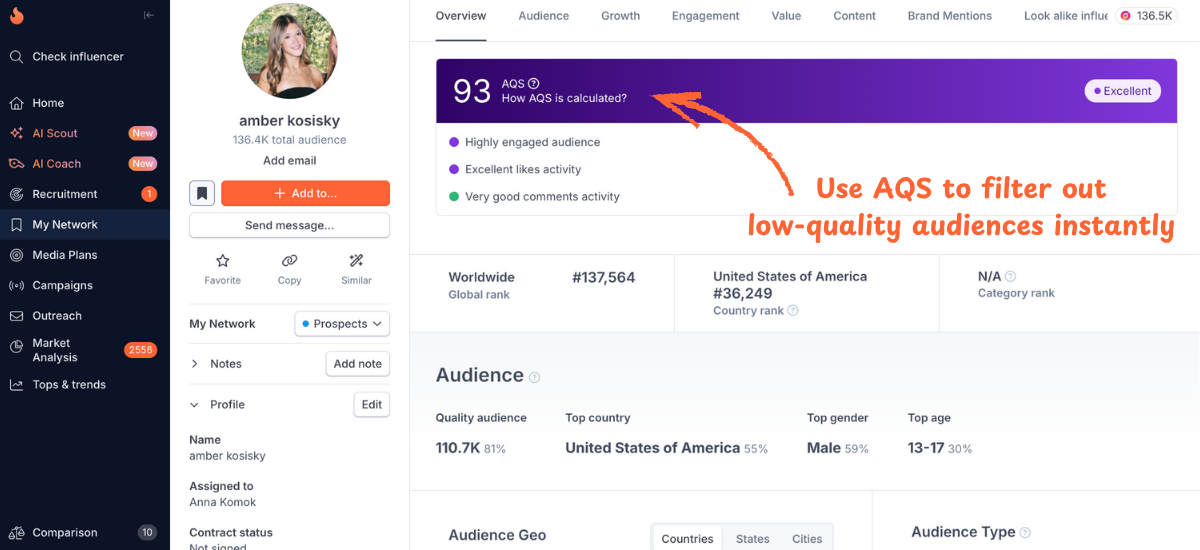
HypeAuditor also allows you to pre-filter creators by brand safety indicators and authenticity, using the Audience Quality Score (AQS). This way, you only see genuine and trustworthy creators before you even start reviewing profiles.
For niche research, you can search by keywords, either in the creator’s bio or in post captions, which helps uncover very specific segments. And if you need even more precision, you can use AI Search, which interprets natural language queries and finds relevant influencers based on your prompt.
Beyond the AI Search inside Influencer Discovery, which you can combine with filters for more precise results, HypeAuditor also offers AI Scout, an intelligent assistant that automatically finds creators based on your brief.
Simply describe your campaign goals, target audience, and preferences, and AI Scout will generate a curated list of creators who match your criteria. It’s a fast way to discover relevant talent without manually adjusting filters or searching through dozens of profiles.
2. Keyword and hashtag search on social media
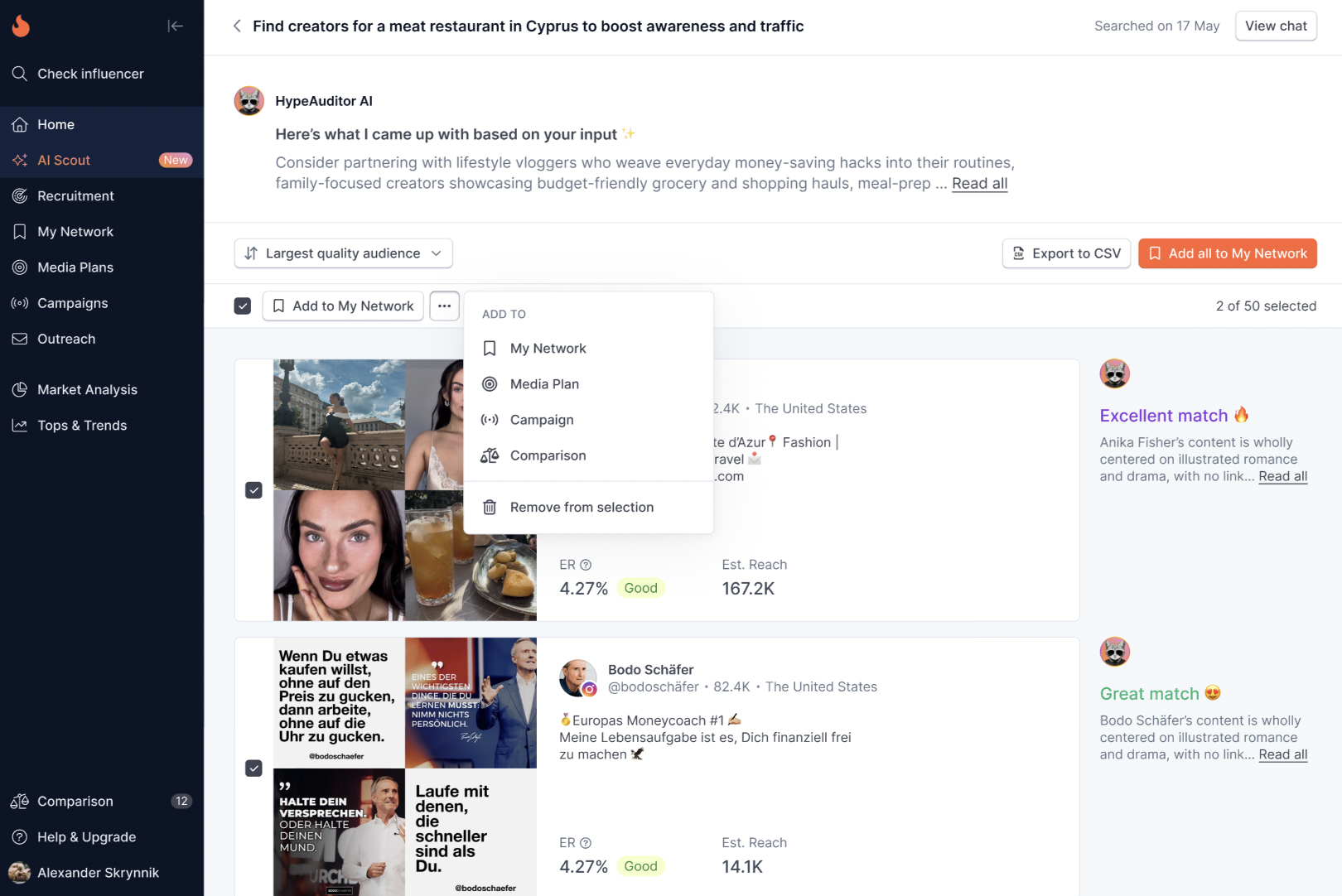
If you type a keyword or phrase directly into the Instagram search bar, you’ll first see a selection of posts and Reels related to your query. By switching tabs, you can move to the Accounts section, where you’ll often find profiles dedicated to that niche, usually your keyword appears either in the account name or in the bio.
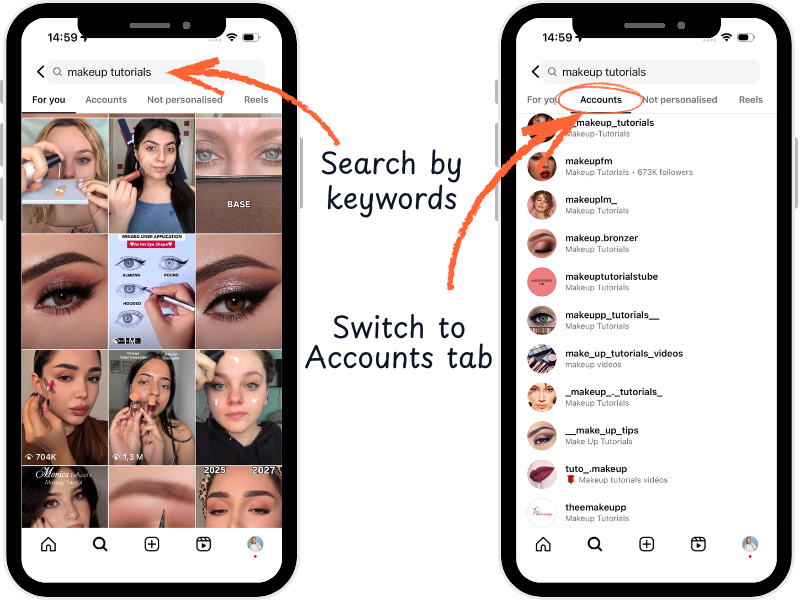
You can also switch to the Reels tab to discover creators based on their content, rather than their overall profile. It's a great way to find creators who may not appear through account search alone.
When it comes to hashtag research, I recommend not typing hashtags in the search bar. Instead, enter a keyword, then switch to the Tags tab. Instagram will show you all related hashtags, starting with the most relevant (exact matches) and then variations. This approach helps you avoid missing important spellings or variations.
For example, with "make up tutorials", the main hashtag is simply #makeuptutorials, and the second most popular version includes an emoji at the end, something you might not think to check manually. There are dozens of similar cases across various niches.
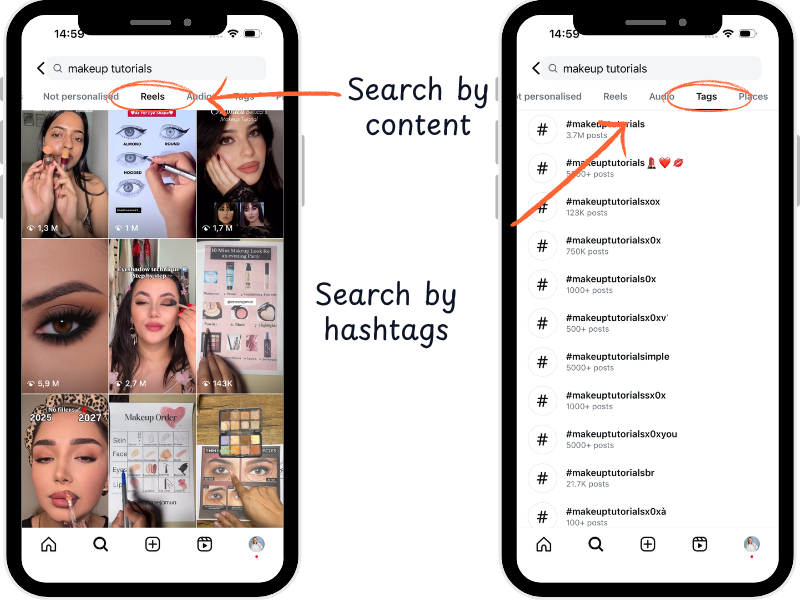
Finally, in some use cases it’s helpful to use the Places tab, where you can search by geotags. It's especially useful if you need creators who produce content in a specific location, venue, or city.
3. Similar accounts search on social media
"One effective way to discover micro influencers on Instagram is by selecting a single profile and tapping the "Similar Accounts" button located next to the "follow" button. Instagram will then provide you with a few influencers with a similar number of followers within the same niche."
— from r/influencermarketing
To use this feature, first identify an influencer who feels like a true match for your campaign. Open their profile and tap the person icon (the “similar accounts” button). You’ll see a row of Suggested for you accounts, you can scroll horizontally to view a few options.
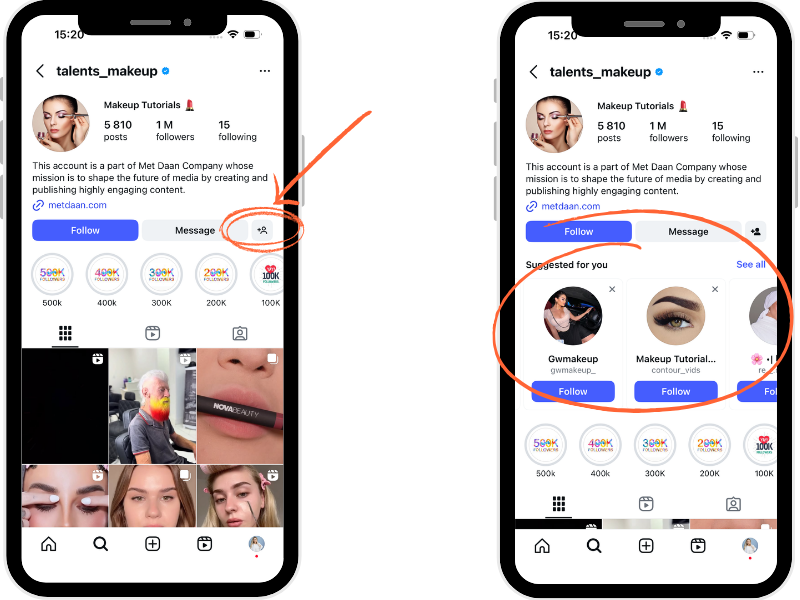
Since Instagram shows only a small selection upfront, tap See all to open the full list. This will display a slightly larger set of creators with similar content or a niche focus, making it an effective way to expand your pool quickly.
Keep in mind that Instagram won’t generate hundreds of similar accounts from a single click. Typically, you’ll see a bit more than 10 suggestions. If you want to build a larger creator list using this method, you’ll need to open each relevant account and check its “similar creators” as well.
These lists will overlap, of course, but you’ll still uncover new creators along the way. It’s a simple but effective way to expand your pool manually.
4. Check the influencer's Following tab
Another simple way to discover relevant creators is by looking at who your target influencer follows. Creators often subscribe to others in their niche, they follow peers for inspiration, trend awareness, and community. This makes their following list a valuable source of similar profiles.
To use this method, open the creator’s Instagram profile and tap the “Following” count. You’ll see a full list of accounts they follow.
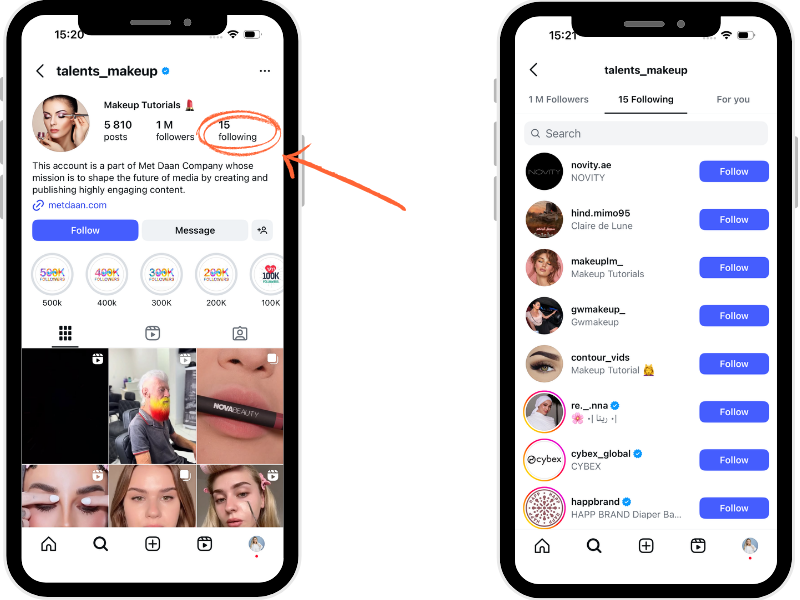
By scanning usernames, avatars, and bios, you can quickly spot other niche-aligned creators worth exploring or adding to your shortlist.
5. Explore niche communities and creator forums
Platforms like Reddit (e.g., r/UGCCreators, r/InfluencerMarketing) or Discord groups host many micro-influencers open to collaborations. You can post a request describing your brand and the type of creators you’re looking for.
On Reddit, searching is fairly straightforward. Just type “creators” or “influencers” into the search bar and browse through the communities that appear. There’s no need to overthink keywords, broad terms work best. Look at the community name and description to understand whether it matches your niche.
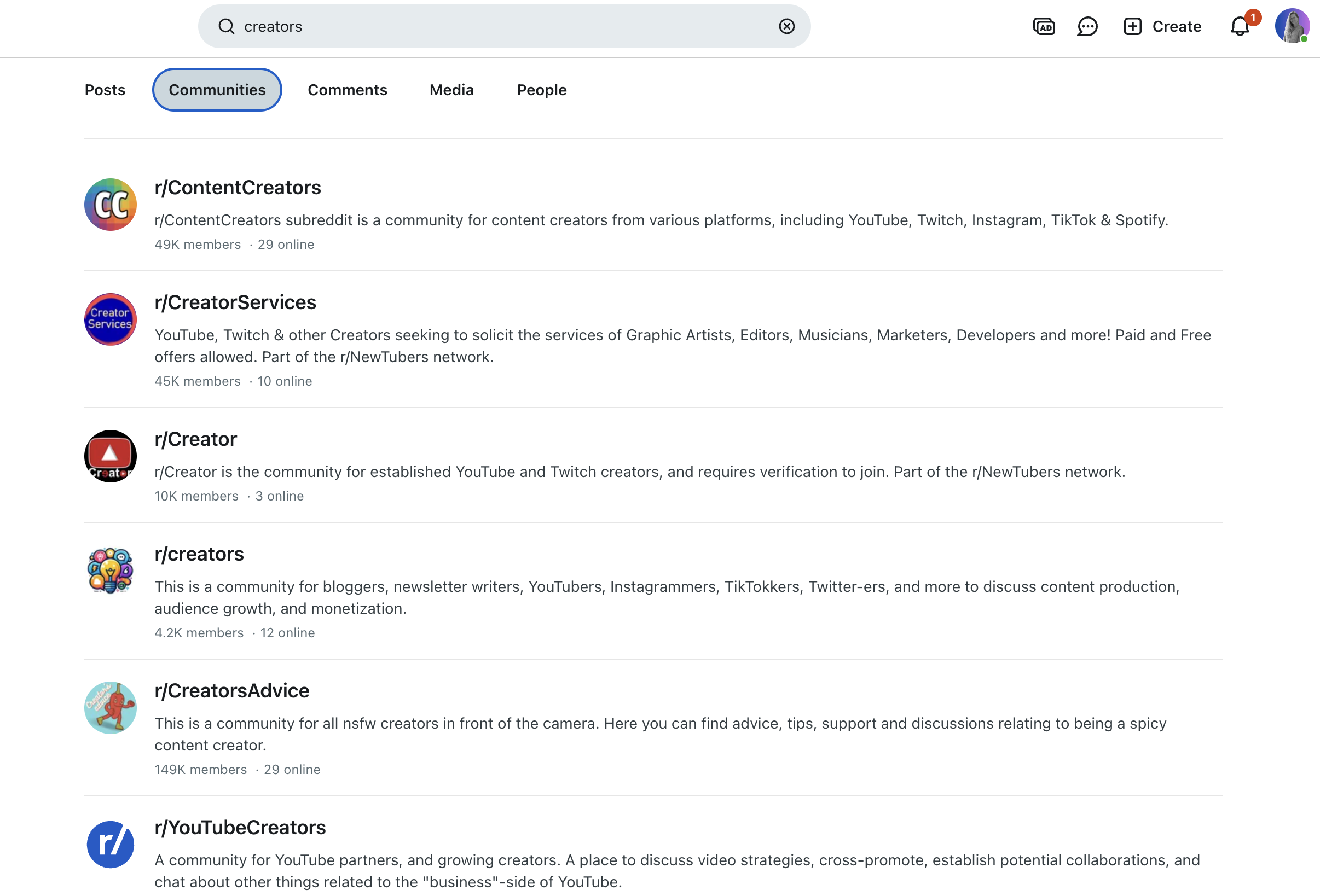 Now that you’ve identified the right communities, let’s talk about how to find creators inside them. There are two simple ways to do this:
DM people who post or comment.
If you see someone sharing content that aligns with your niche or target audience, click into their profile and reach out directly. Active community members are often micro-creators or UGC creators who are open to collaborations.
Post a request inside the community.
You can write something like: “We’re a brand in X category and we’re looking for creators who do Y.”
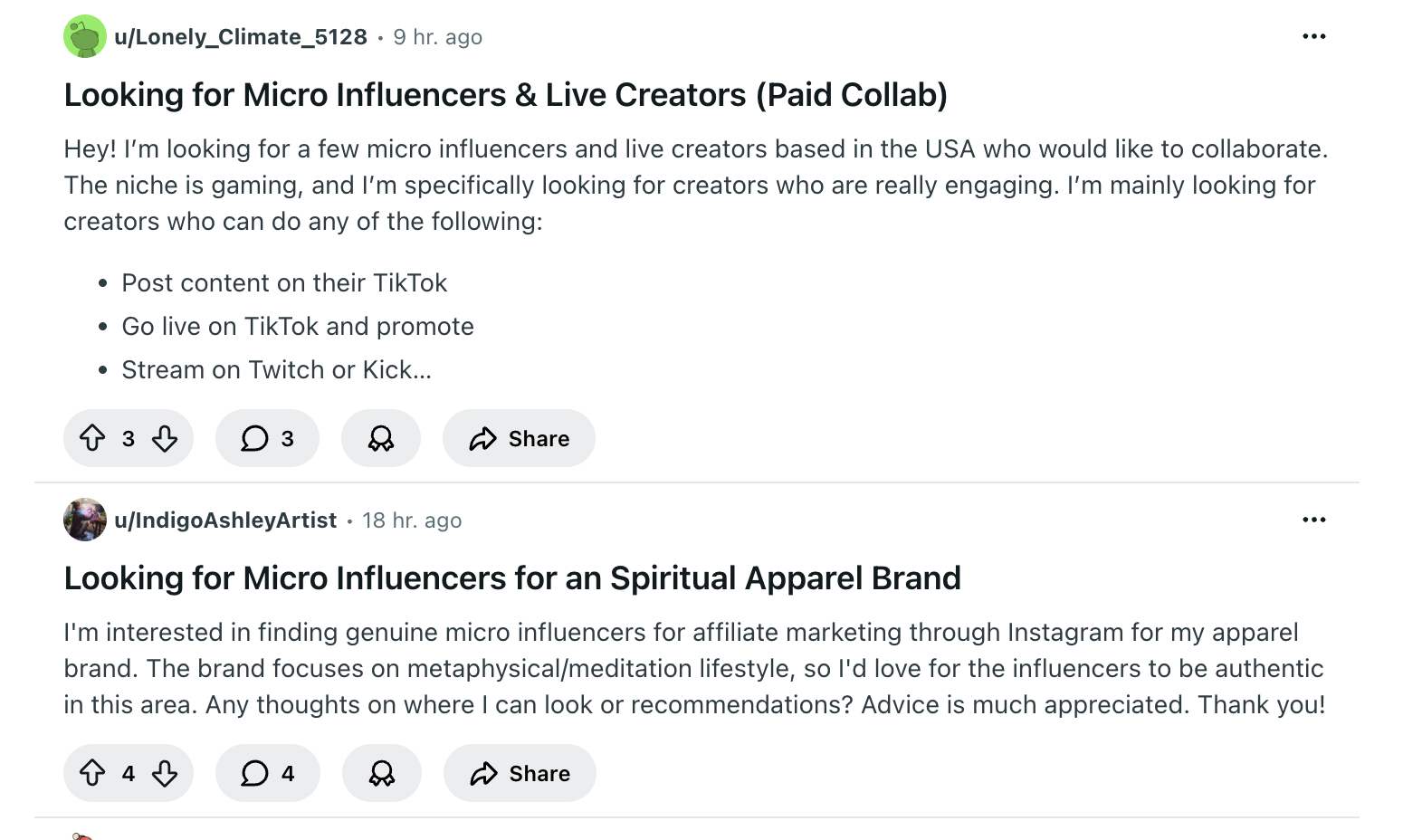
People will respond in the comments or message you directly. This is one of the fastest ways to collect relevant candidates, especially in niche, active subreddits.
6. Check lookalike tools
Lookalike tools are built into some influencer marketing platforms, such as HypeAuditor. This feature lets you discover creators similar to those you already like. In HypeAuditor, there are two ways to run a lookalike search.
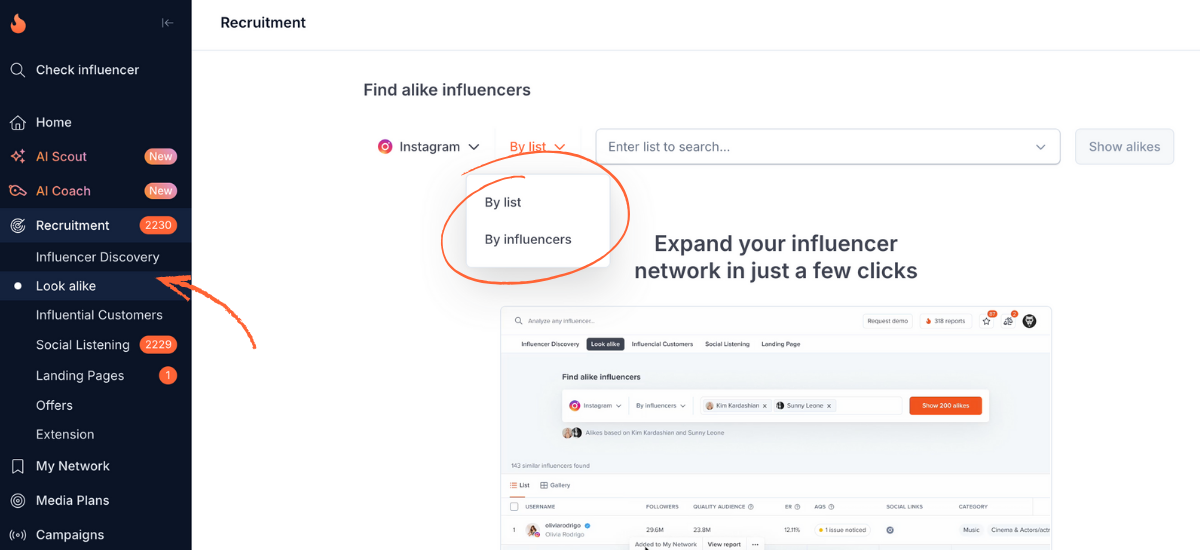
1) Lookalikes by creator profiles.
You enter one or several influencer profiles, and the system automatically finds similar creators based on its own algorithm and internal data.
How is this different from what you get on Instagram?
First, HypeAuditor uses its proprietary algorithm built on platform-wide data. Second, Instagram typically shows just a handful of similar accounts (around 10), while HypeAuditor can return hundreds of relevant creators. You can also filter results by creator location and size, which Instagram doesn’t allow.
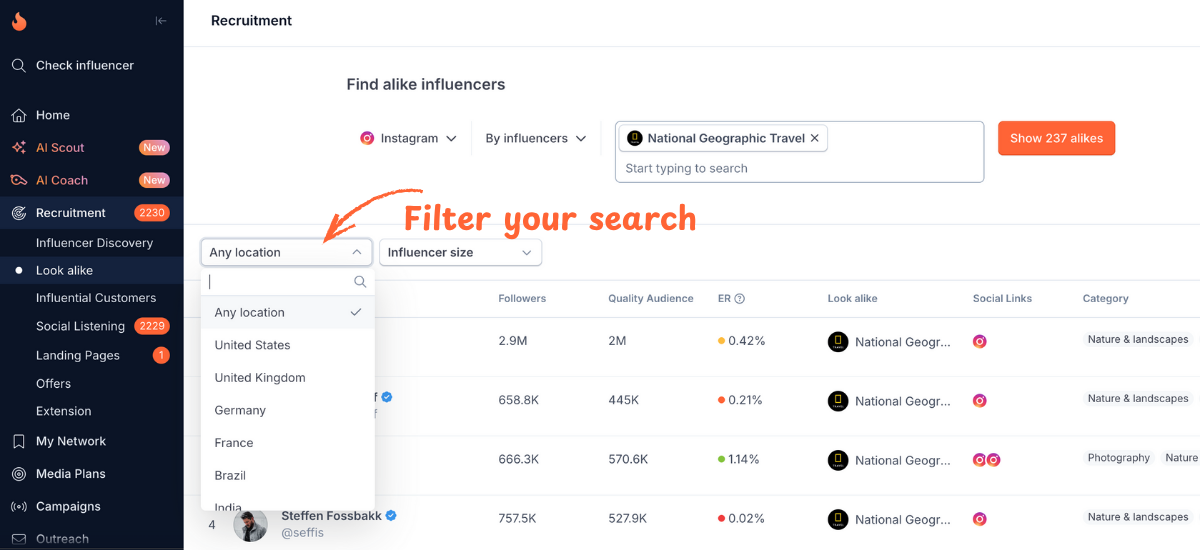
2) Lookalikes by lists.
This method works when you already have a batch of creators that match your campaign. First, create a list in HypeAuditor and add the influencers you’ve gathered, for example, from the Influencer Discovery Tool. Then run a lookalike search based on that list. The system will analyze all creators inside it and produce a broader set of profiles with similar characteristics.
7. Search among your existing customers and registered users
Some influencer marketing platforms with large databases offer a customer match tool. It helps you identify whether any creators are already hidden inside your existing user or customer base. In HypeAuditor, there are two ways to use this feature.
1) Uploading a CSV file.
You can simply upload a CSV export from your CRM system. This can include registered users, newsletter subscribers, SaaS sign-ups, or your current customers. The system will automatically match these emails against its creator database and show which of your users are actually influencers.
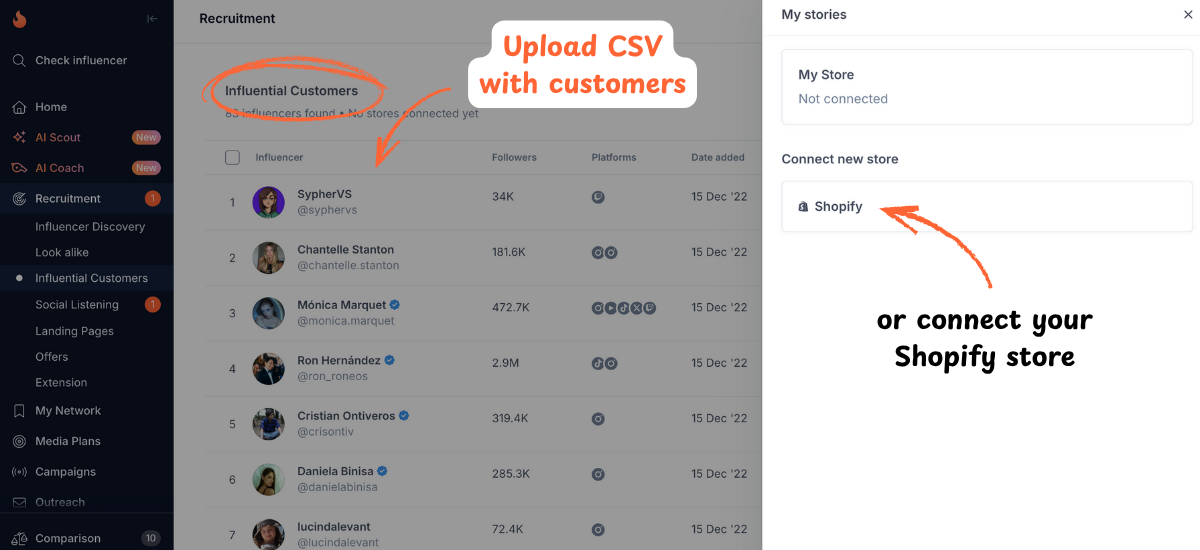
2) Connecting your Shopify store.
You can also integrate your Shopify store directly. HypeAuditor will scan your entire customer base, identify creators who have already purchased from you, and continue updating automatically. If a new influential customer appears in your store, the system will detect them without requiring any manual uploads.
8. Social listening tools to find creators
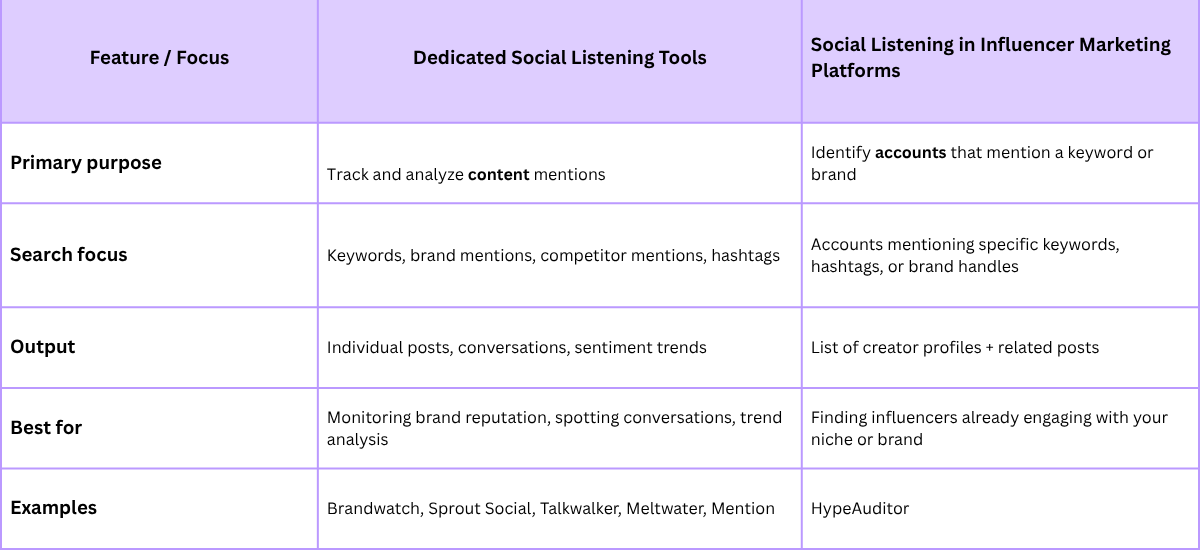
Another effective way to find creators is by using social listening tools. Dedicated social listening platforms scan social networks for mentions of your brand, your competitors, or any specific keywords. These tools are designed primarily to surface content that contains the keywords you track, rather than creator profiles.
Some influencer marketing platforms also include built-in social listening features, for example, HypeAuditor. In this case, the focus is slightly different. The system prioritizes accounts that mention your keyword, hashtag, or brand handle. You’ll first see the profiles that have referenced your term, and from there, you can open the specific posts they’ve created.
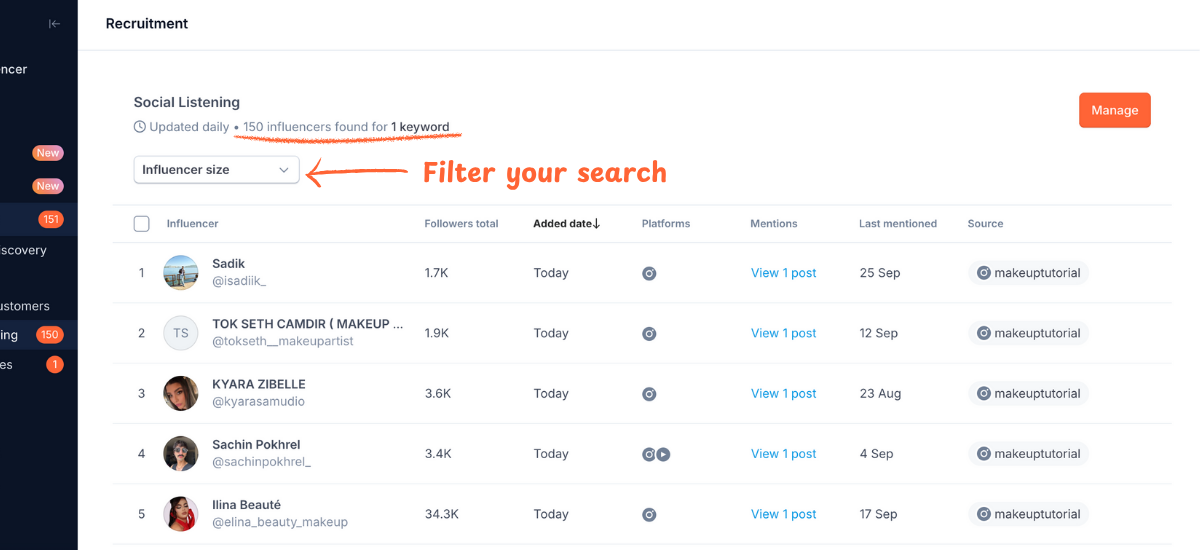 So while dedicated social listening tools center on content discovery, integrated social listening in IM platforms centers on account discovery. Both approaches can help you uncover creators already talking about your niche, your product category, or your competitors.
Comparison table: Dedicated Social Listening Tools vs. Social Listening Inside IM Platforms
9. Use a branded landing page to attract creators who want to collaborate with your brand
A dedicated landing page for creators is an excellent way to attract influencers who want to work directly with your brand or are actively looking for new partnerships. Many brands use these pages to centralize creator applications. Typically, the page includes a simple form where creators can submit their details.
You can build this manually; even a basic Google Form will work, but a pro-level landing page in an influencer marketing platform offers much more functionality. When a creator fills out the form, the system automatically matches their handle with the internal database and pulls full analytics. This means that you get detailed insights about their audience, demographics, engagement, and authenticity.
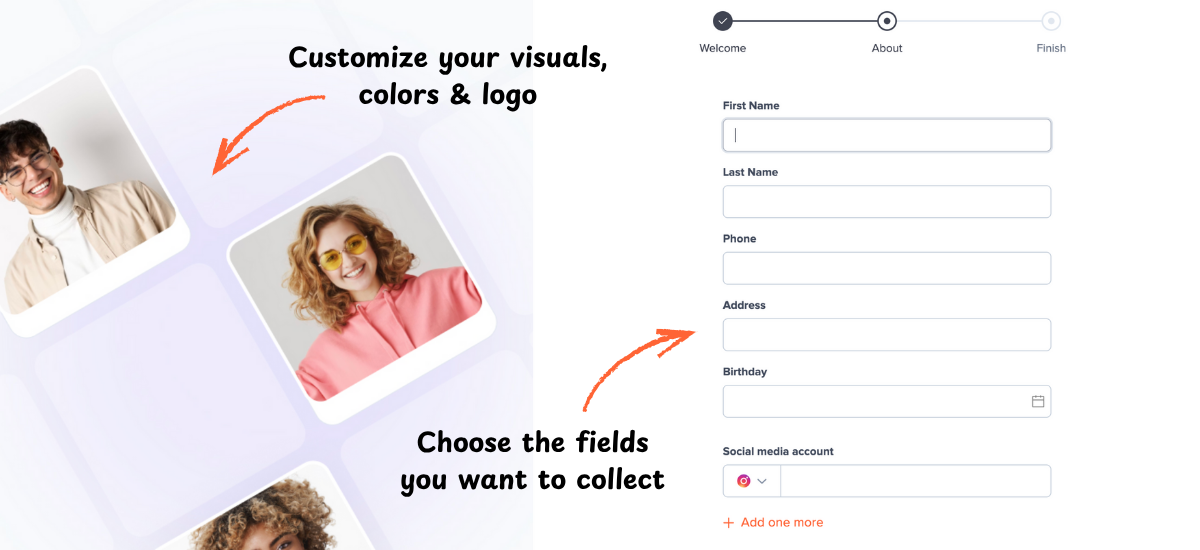
All submitted creators are automatically organized into a dedicated list on the platform, making it easy to review, vet, and manage incoming applicants without manual sorting.
10. Use influencer marketplaces
These are platforms where brands post collaboration offers and creators apply to participate. They’re especially popular among nano- and micro-influencers, who actively seek partnerships. Marketplaces simplify outreach, instead of searching manually, you can publish your brief and let interested creators come to you.
Some of the most popular global influencer marketplaces include Hashtag Paid, Collabstr, and Insense. These platforms attract large volumes of nano- and micro-creators actively looking for brand deals.
There are also niche and local marketplaces that work especially well for specific regions or verticals. For example, ReachABlogger is widely used in Poland, Sociabuddy and Buzzoole are strong in parts of Europe, SociaBuzz is popular among Indonesian creators.
11. Check talent agencies
Talent agencies work differently from influencer marketing agencies or marketplaces. Instead of managing campaigns for brands or hosting open applications, they represent creators directly, similar to how traditional talent agencies represent actors or athletes. Their primary role is to manage the creator’s business: negotiate deals, review contracts, secure brand partnerships, and develop long-term opportunities.
Unlike marketplaces, where any creator can apply, talent agencies curate their roster and work only with creators they choose to represent. And unlike general IM agencies, which run campaigns for brands, talent agencies focus on the creators’ interests first.
There are several types of talent agencies:
Niche-specific agencies (e.g., beauty, gaming, travel, fitness)
Geo-focused agencies (representing creators from a specific country or region)
Category-driven agencies (UGC creators, lifestyle creators, family/mom creators, comedy creators, etc.)
Multi-platform talent agencies (replicating the traditional entertainment model across Instagram, TikTok, YouTube, Twitch)
Examples include Influence.co Talent, Viral Nation Talent, The Influencer Marketing Factory Talent, Select Management Group, Slash Management, IGM, YMU, and regional agencies like INDAH Talent (Indonesia) or ByteSize Talent (UK).
Working with talent agencies can be efficient. They’ll typically send media kits, vetted data, and handle all logistics, from negotiations to deadlines, which significantly reduces the operational load on brands.
What to keep in mind
Not all micro-influencers are equal. Some maintain close communities and natural conversations, while others may have grown quickly through giveaways or viral trends that attract less-engaged followers. Before reaching out, check their comment sections to see how audiences interact.
It’s also worth looking at how consistent their posting habits are. Micro-influencers who share content regularly tend to have more stable visibility in algorithms, which means your brand will appear more often in front of their audience. Sporadic posting or long breaks can reduce that impact, even if the content quality is high.
When managing partnerships, remember that many micro-influencers work independently. They might not have a team to handle contracts, scheduling, or creative direction. Therefore, clear communication about expectations, deadlines, and deliverables helps prevent misunderstandings and keeps collaborations smooth.
If you're short on time and need to get a curated shortlist of micro-influencers within seconds, HypeAuditor Influencer Discovery is a wise and reliable option.