

Launching a new product is one of the most critical moments for any business. It is the point where months of planning meet the real test of market response. In this article, we’ll walk you through what a product launch involves, how influencer marketing ties into it, and why the right platform can make a difference. We’ll also share our picks for the best influencer platforms for product launches so you can approach yours with confidence.
A product launch is more than just releasing something new on the market. It usually involves stages like research, testing, setting timelines, building awareness, and creating demand. Each step requires careful execution to make sure the launch lands well. This is where marketing plays a central role, helping the product gain visibility and traction from day one.
Among the different strategies available, influencer marketing has become a natural fit for launches. Influencers can introduce a product to audiences in a personal way that traditional ads often cannot. Their presence can turn a product debut into a moment of shared excitement.
For brands, especially e-commerce and direct-to-consumer companies, the choice of influencer platform can shape how smoothly campaigns run. With so many things to manage, the right platform makes coordination easier and results clearer. In the next sections, we’ll look at why influencers matter for launches, why platforms are worth using, and which platforms stand out today.
Why Influencers Matter for Product Launches
Launching a product is always a high-stakes moment. Brands face the challenge of getting attention quickly and convincing people to care about something new. Traditional marketing often takes longer to gain traction, which is why more companies are leaning on influencers to bring faster results. Their role in this stage is no longer optional. It has become essential.
Influencers step into product launches with a unique kind of power. They are more than just media channels. They are trusted voices that people already follow closely in their daily lives. By sharing products in real situations, they make launches feel credible and personal. This kind of authenticity cannot be matched by polished brand ads.
Build immediate trust and credibility
Followers view influencers as people they can relate to. When an influencer tries a new product and shares their honest experience, hesitation among potential buyers decreases.
Expand reach to targeted audiences
Influencers often build communities around specific interests. Partnering with them allows brands to reach the exact audiences most likely to purchase, something that mass advertising rarely achieves.
Accelerate product awareness
A single post or video can introduce a product to thousands of engaged followers overnight, creating buzz far quicker than traditional campaigns.
Drive conversions and sales
Because influencers have built trust over time, their recommendations carry weight. This makes their endorsements especially persuasive during launches, often translating directly into sales.
Facilitate two-way communication
Through comments, stories, and live sessions, influencers give customers a way to ask questions and share feedback. For brands, this interaction becomes valuable real-time insight during the launch phase.
Boost engagement and community building
Beyond short-term sales, influencers help foster a sense of belonging around the product. Their consistent engagement strengthens the connection between a brand and its audience.
Provide actionable insights
Working with micro and nano-influencers gives brands early feedback that can guide adjustments in messaging or positioning during the launch.
When brands skip influencers, they risk missing out on the urgency, trust, and reach that modern launches demand. The question is no longer if influencers matter, but how quickly you can bring them into your launch strategy.
Why Use Influencer Platforms for Product Launches
Influencer marketing platforms, often called influencer platforms, are digital tools that help brands manage their entire influencer campaigns. In product launches, where timing and coordination are critical, these platforms give brands the structure and insights needed to work effectively with influencers.
They connect you with the right influencers, provide audience insights, and keep campaigns organized from planning through reporting. For product launches, where every step needs to be coordinated well, these platforms can take a lot of weight off your team.
Find the Right Influencers Faster
One of the biggest tasks in a product launch is finding people who can truly connect with your audience. Influencer platforms come with powerful discovery tools that let you search by niche, audience demographics, engagement rate, and reach. Instead of relying on assumptions, you can see hard data about who an influencer’s followers are and choose the ones most likely to care about your launch.
Manage Campaigns in One Place
A launch often brings a rush of deadlines, approvals, and back-and-forth communication. Influencer platforms provide campaign management tools where you can share briefs, track deliverables, and handle all communication in one hub. This setup helps keep everyone focused on the same plan without losing time switching between emails, chats, or manual tracking sheets.
Amplify Product Visibility Through Content
Influencers are not just promoting products, they are also creating content that speaks directly to their communities. Platforms help you coordinate this process by organizing posts, stories, and videos in a way that maximizes exposure. By guiding when and how content goes live, they help your product appear at the right moment and in the right context, ready to create buzz that traditional ads cannot match.
Measure Results with Confidence
During a launch, brands need more than surface-level numbers. Influencer platforms offer performance analytics that track engagement, impressions, clicks, and conversions. Instead of relying on assumptions, you can see which influencers are driving awareness and sales in real time. These insights make it easier to decide what is working and what needs to be adjusted while the launch is still active.
How to Use Influencer Marketing for a Successful Product Launch
An influencer marketing platform is more than a directory of creators. For product launches, it works as the command center where planning, outreach, content, and measurement all come together. By using a platform strategically, brands can cut the guesswork and make launches run in a more focused and coordinated way.
Choose the Most Suitable Platform
Once brands know what they want to achieve with a launch (building awareness, driving pre-orders, or pushing sales), the next step is deciding which platform can support those goals. Each tool comes with different strengths, so it is worth researching the features closely. Small and mid-sized businesses especially need to weigh costs carefully, since influencer launches already require a budget for fees or product samples. Taking time to match the platform’s benefits with the campaign’s needs helps prevent overspending and makes the investment worthwhile.
Use Discovery Tools to Pinpoint the Right Influencers
Instead of browsing social media manually, platforms provide search filters for niche, audience demographics, and engagement rate. This helps brands find influencers whose followers genuinely match the product’s target buyers. By starting with data-backed profiles, you can focus your energy on partnerships that are more likely to drive results.
Manage Briefs and Content Through One Hub
A launch often involves several influencers, each with different deliverables and deadlines. Platforms keep this organized by storing campaign briefs, timelines, and approvals in one place. This prevents miscommunication and helps brands keep the launch schedule consistent without bouncing between emails or spreadsheets.
Monitor Results and Adjust in Real Time
During a launch, timing is everything. Influencer platforms provide dashboards that track how content performs the moment it goes live, covering impressions, engagement, clicks, and even sales. Brands can follow product seeding progress, see which posts are gaining traction, and adjust their approach while the campaign is still running. This agility helps prevent wasted effort and keeps the launch on track.
Generate Reports Automatically
Once the launch is underway or completed, reporting becomes critical. Influencer platforms usually offer automated reporting features that replace the need for manual tracking. Many tools even let brands customize reports by choosing which metrics to highlight or hide, tailoring the view for stakeholders. This makes it easier to present clear results, prove impact, and refine strategies for future launches.
Best Influencer Platforms for Product Launches
We’ve looked at why influencers matter during launches and how platforms can help brands manage every step of the process. The next question is which platforms stand out when it comes to supporting high-pressure campaigns like product launches. Not every tool offers the same strengths, and choosing the right one depends on your budget, business size, and the type of launch you’re planning.
To help narrow the options, we’ve gathered some of the best influencer platforms that can make product launches more effective. Each of these tools brings unique features from influencer discovery and product seeding to campaign management and ROI tracking that are particularly useful when timing and execution are critical. Let’s take a closer look at what they offer and who they’re best suited for.
1. HypeAuditor
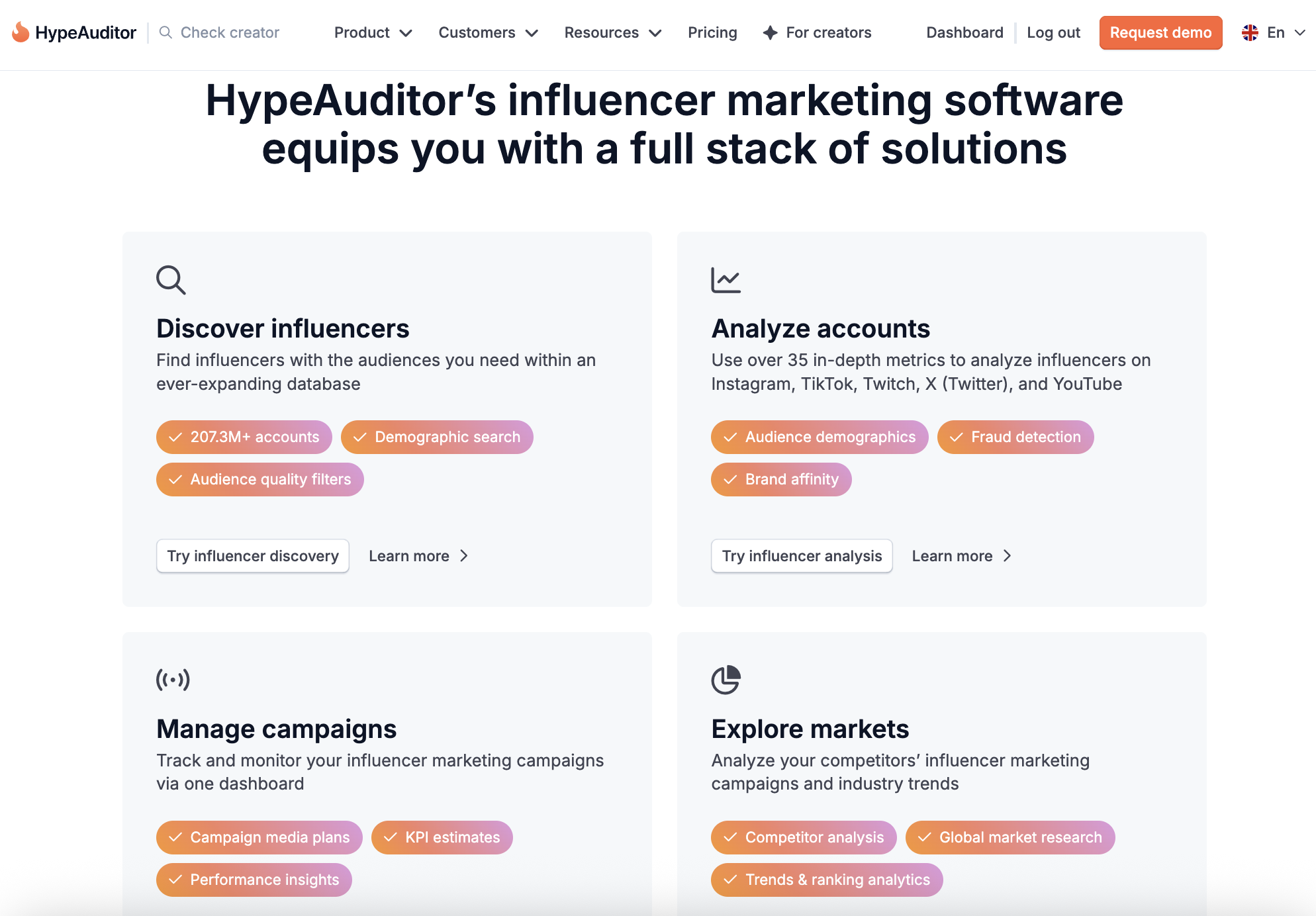 HypeAuditor stands out as a platform that covers almost every step of influencer marketing, which is why it works so well for product launches. With access to more than 205 million influencer profiles across Instagram, TikTok, YouTube, Twitch, and Twitter, it gives brands the reach they need but also the filters to narrow down the right partners. You can search by niche, location, audience demographics, and even authenticity, which is key when trying to introduce something new to the right crowd.
One of the strongest points of HypeAuditor is its fraud detection. The platform can spot fake or bot followers with over 95 percent accuracy, and its Audience Quality Score (AQS) gives a quick sense of how trustworthy an influencer’s audience really is. During a product launch, when budgets and timing are tight, that level of protection keeps campaigns credible and impactful.
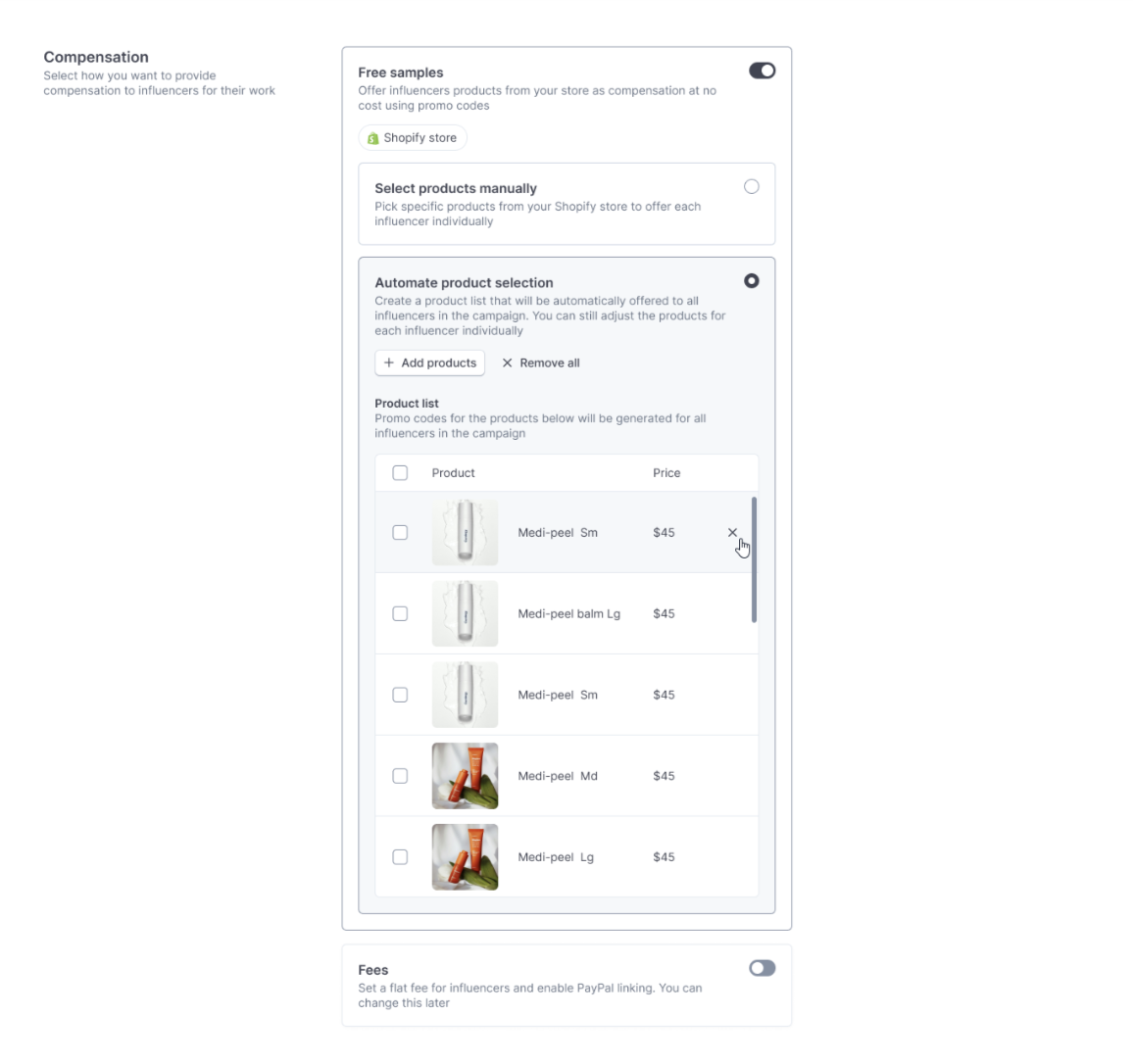 Product seeding is another feature built for launches. Instead of handling samples manually, HypeAuditor automates the process of sending products to influencers, then tracks how those items link to content and sales. Thanks to integrations with Shopify, WooCommerce, and Magento, brands can even see how influencer posts connect directly to conversions. Real-time dashboards keep teams updated on clicks, engagement, and revenue as the campaign unfolds.
On top of that, HypeAuditor makes the whole workflow easier. Brands can manage contracts, pay influencers through PayPal in over 200 countries, and create reports that are both automated and customizable. The platform has also introduced AI-powered tools: AI Scout, AI Assistant, and AI Coach; that speed up discovery, outreach, and strategy planning. For teams handling a high-pressure launch, it feels less like juggling tasks and more like running a campaign with everything in one place.
Important Features: Influencer discovery, Audience Quality Score and fraud detection, product seeding automation, campaign management with e-commerce integration, ROI tracking, influencer payments, contract management, AI Scout/Assistant/Coach, social listening, advanced reporting.
Pricing: Starts from $399/month (publicly available).
Free Trial: No free trial, but demo available.
2. Upfluence
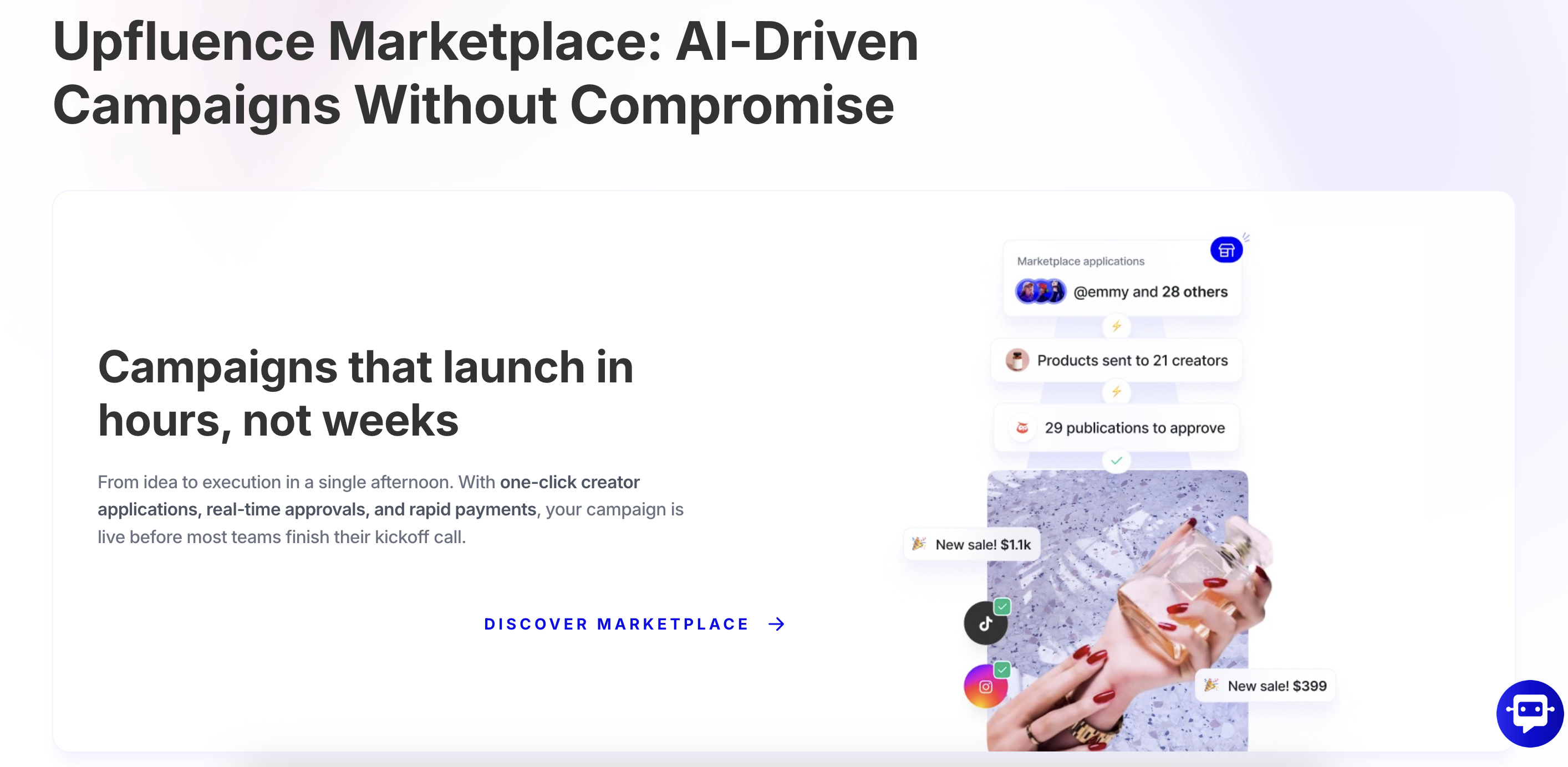 Upfluence is a favorite among e-commerce brands because it connects influencer marketing directly to online store performance. With a database of more than 12 million influencers across Instagram, TikTok, YouTube, Twitter, Pinterest, and more, the platform makes it easy to filter by niche, location, engagement, and audience demographics. It even helps identify influencers who already like your brand, which often leads to more authentic and impactful collaborations during product launches.
The platform goes beyond discovery by handling product seeding, campaign management, and payments all in one place. Influencers can select products directly, orders are generated automatically, and shipping details are tracked within the platform. Upfluence also integrates with Shopify, WooCommerce, and Magento, so brands can connect influencer activity to real sales. Reporting and affiliate tools add another layer of visibility, making it easier to see how every piece of content contributes to a launch.
Important Features: Influencer discovery, audience analytics, competitor analysis, automated product seeding, gifting, affiliate links, campaign management, integrated payments, reporting, e-commerce integrations.
Pricing: Custom pricing, based on brand needs.
Free Trial: No free trial, demo available.
3. Aspire
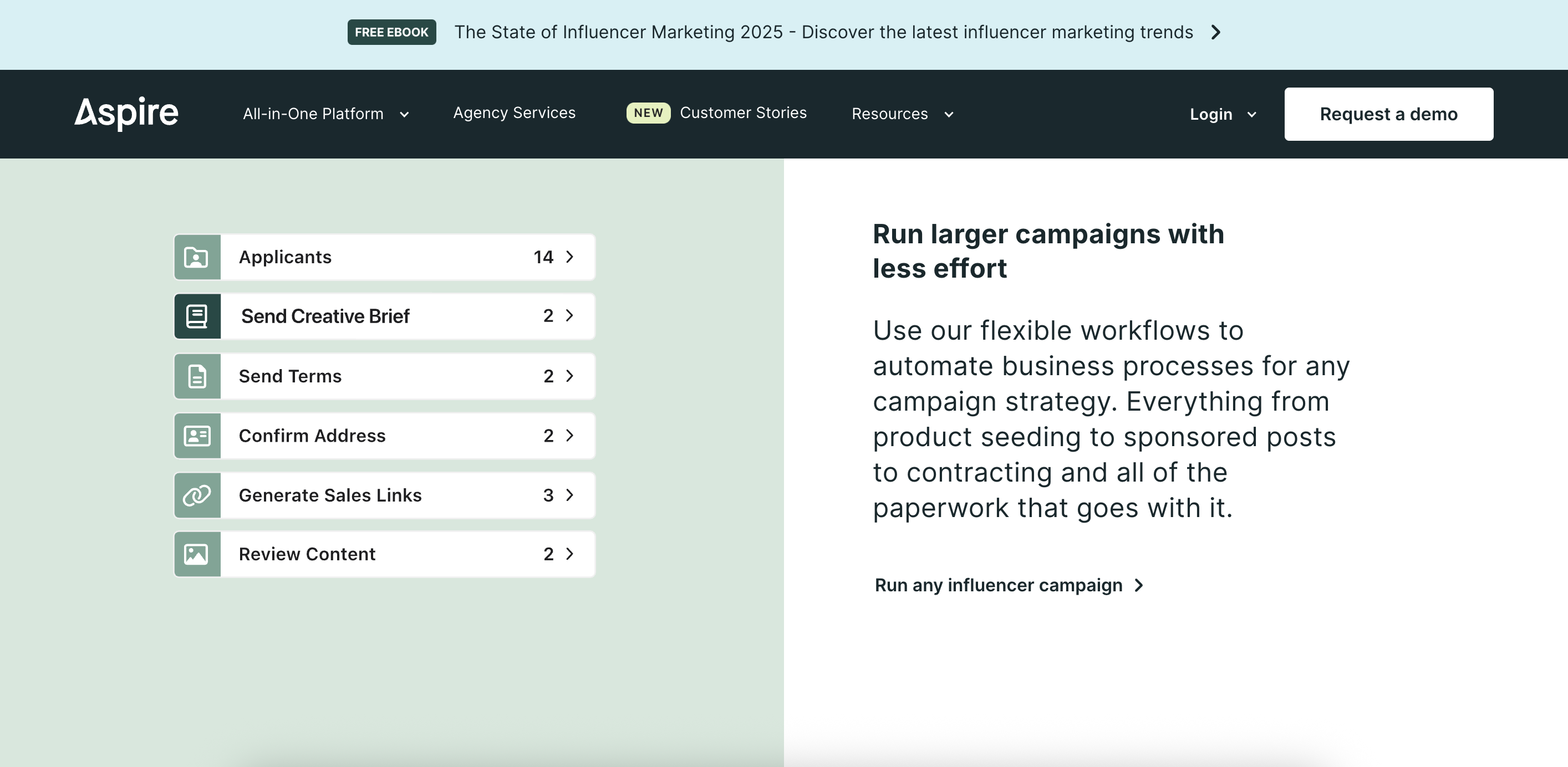 Aspire takes a structured approach to influencer marketing, making it well-suited for brands planning large-scale launches. Its powerful search engine spans Instagram, TikTok, Pinterest, YouTube, and Facebook, with filters for demographics, engagement, and content style. The Creator Marketplace also flips the process, letting influencers apply directly to brand campaigns, which makes recruitment faster and more organic.
For execution, Aspire covers every stage of a campaign: product fulfillment, content review, communication, and payments. The platform is particularly strong for product gifting at scale, pulling items straight from Shopify and tracking delivery and feedback in real time. It also secures content rights automatically, stores influencer posts in a digital library, and connects sales performance through unique codes and links. This end-to-end workflow gives brands confidence that launches will stay organized and measurable.
Important Features: Influencer search, Creator Marketplace, automated gifting, product fulfillment, campaign management, relationship management, content rights, affiliate links, reporting, e-commerce integrations.
Pricing: Custom pricing, tailored to brand requirements.
Free Trial: No free trial, demo available.
4. GRIN
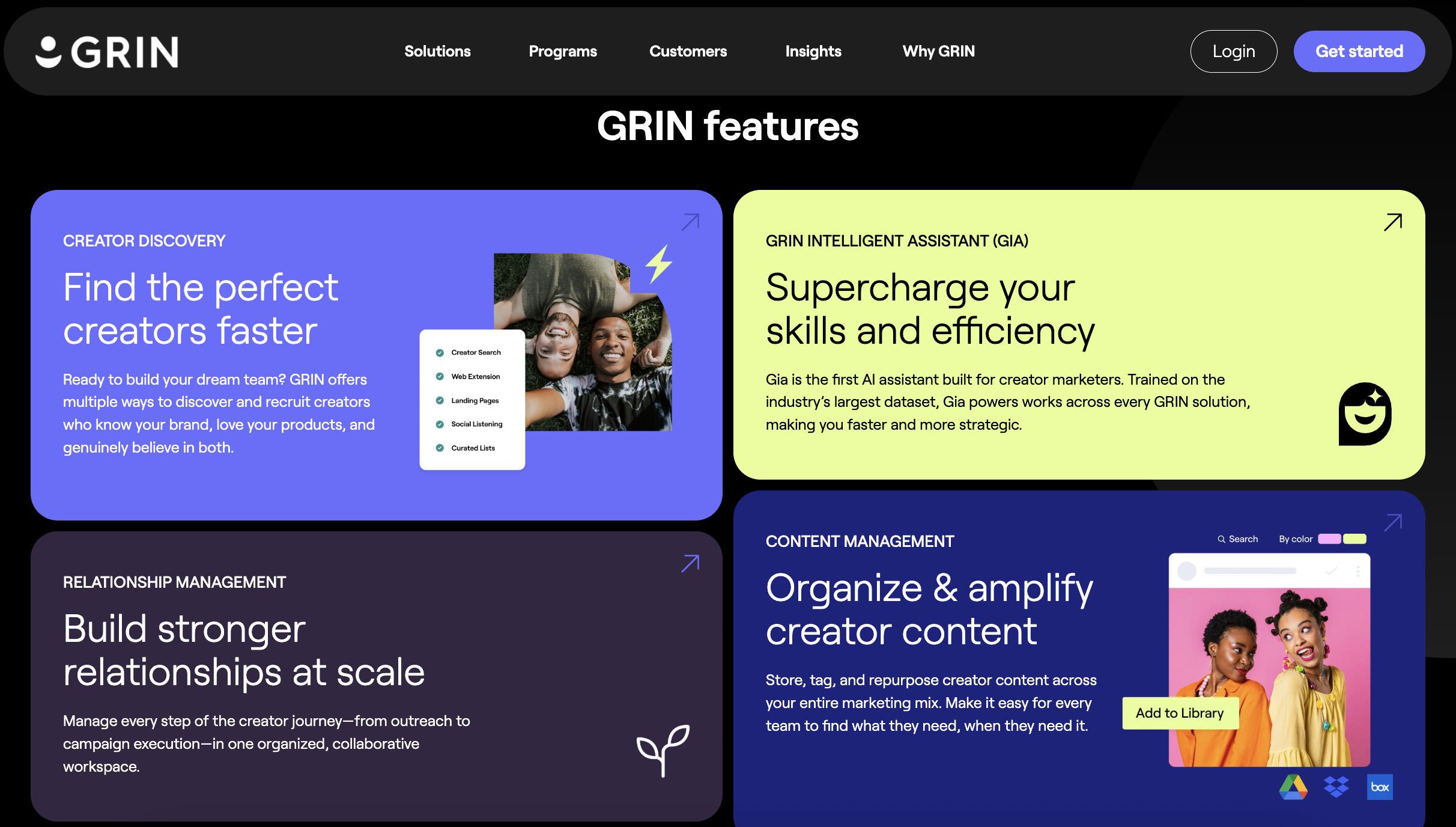 GRIN is designed for brands that want to manage influencer relationships like long-term partnerships rather than one-off deals. It comes with a proprietary marketplace and social search engine to find new influencers, while also surfacing those already connected to your brand. Built-in CRM-style tools let teams track communication, collaboration history, and campaign performance in one place, which helps maintain strong ties over multiple launches.
The platform is deeply integrated with e-commerce, connecting to Shopify, WooCommerce, Magento, and Salesforce Commerce Cloud for product seeding, affiliate links, and sales tracking. Campaign management tools cover contracts, content approvals, and payments, while the content library organizes influencer posts for repurposing across channels. Automated tax compliance and detailed reporting dashboards round out the system, making GRIN a reliable choice for scaling influencer launches without losing personal connections.
Important Features: Influencer marketplace, CRM-style relationship tracking, campaign management, product seeding, affiliate links, e-commerce integrations, content library, analytics, automated payments, tax compliance.
Pricing: Custom pricing, typically mid-to-enterprise level.
Free Trial: No free trial, demo available.
5. Modash
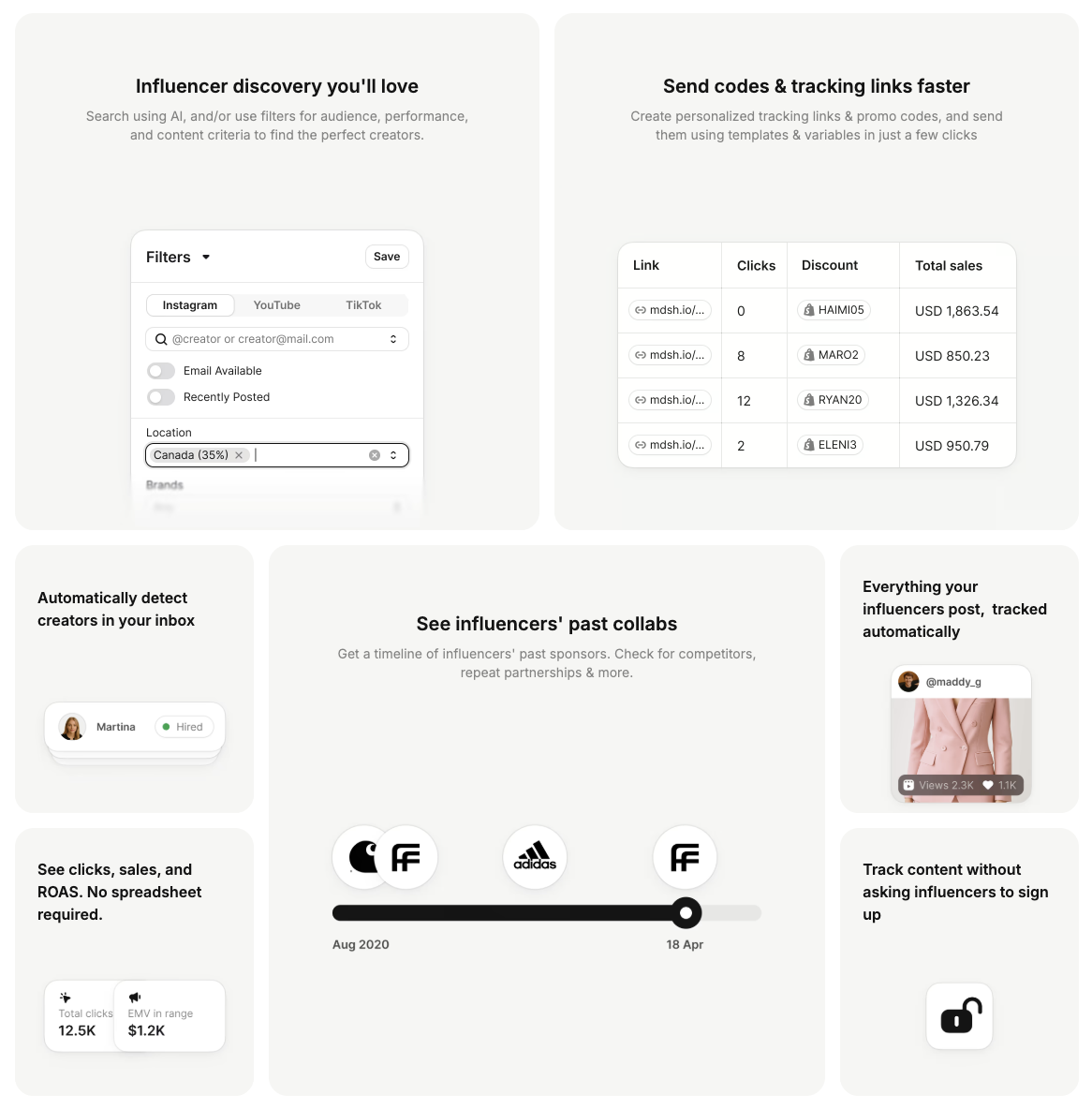 Modash is built for brands that need scale. With access to over 350 million influencer profiles across Instagram, TikTok, and YouTube, the platform helps teams drill down using filters for demographics, engagement, interests, and even fake follower detection. This makes it easier to find influencers with audiences that truly match your launch goals, whether you’re targeting a niche market or a broader consumer base.
The platform also makes campaign execution smooth. You can auto-track influencer content, including Stories, without asking creators for logins, and connect promo codes or affiliate links directly to Shopify to see real sales impact. Product gifting is simplified through self-selection links, while payments are handled securely with an escrow system that supports multiple currencies. For brands running global launches, Modash removes many of the manual hurdles that slow teams down.
Important Features: 350M+ influencer database, advanced filters, fake follower detection, audience analytics, content tracking, Shopify integration, product gifting, affiliate links, influencer payments, API integrations.
Pricing: Starts from $99/month.
Free Trial: Yes, 14 days.
6. Influencity
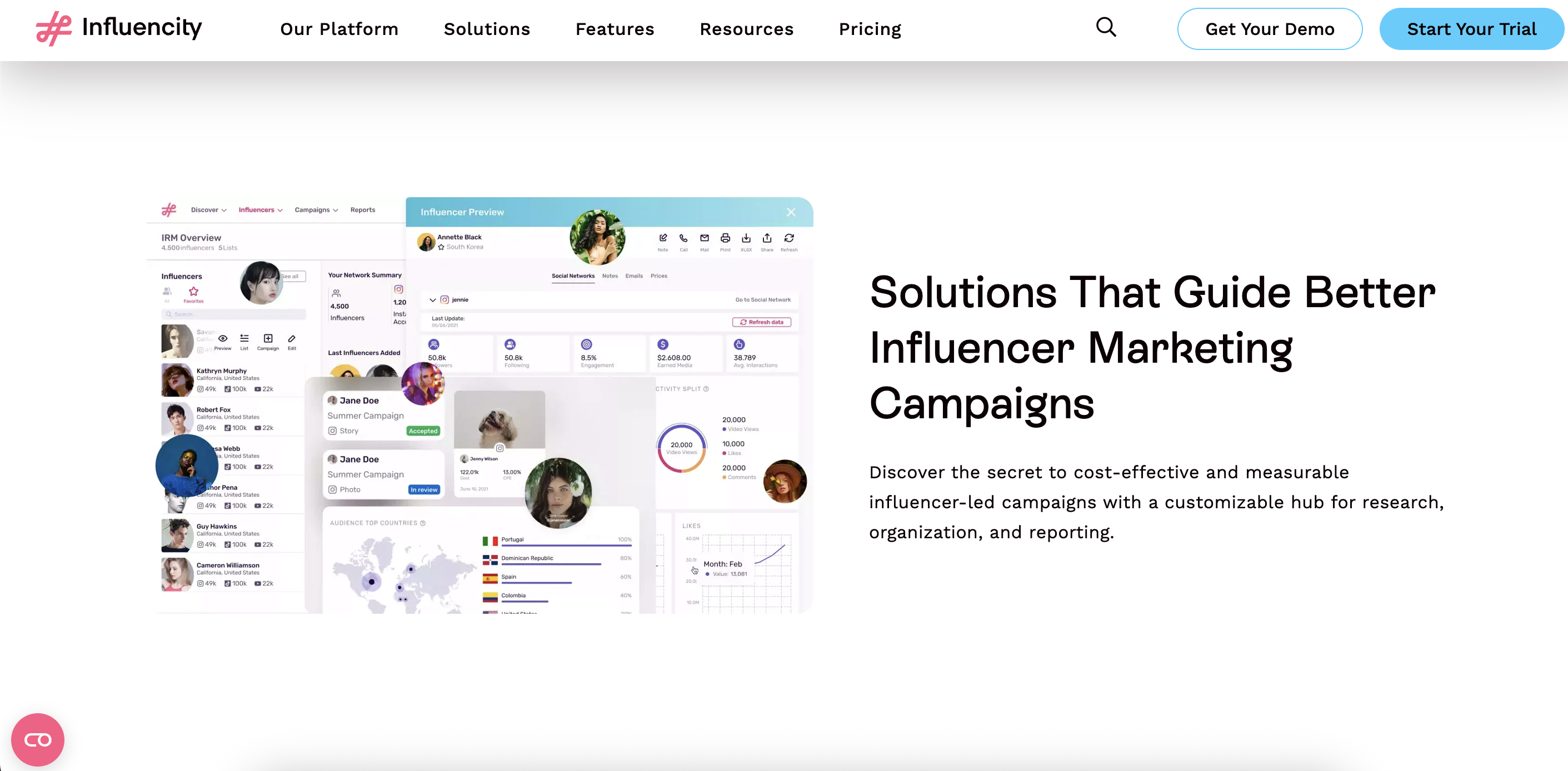 Influencity offers one of the largest influencer databases, tracking over 200 million creators worldwide across Instagram, TikTok, YouTube, and Twitter. Its discovery tools come with advanced filters to pinpoint influencers who align with your launch strategy, and detailed analytics help confirm audience quality before you commit. For brands running multiple launches, the platform’s ability to manage influencers at scale stands out.
The platform also brings in strong campaign management and reporting features. You can automate product gifting, track performance with dashboards showing impressions, reach, and sales, and integrate directly with Shopify for code and sales attribution. Influencity goes a step further with AI-powered trend discovery, giving brands insights into consumer opinions and emerging market shifts before competitors. This makes it a valuable tool for launches that need both precision and foresight.
Important Features: 200M+ influencer database, advanced search filters, influencer relationship management, product gifting automation, Shopify integration, real-time analytics, trend forecasting, social listening, team collaboration tools.
Pricing: Starts from $148/month.
Free Trial: Yes, 7 days.
7. Creator.co
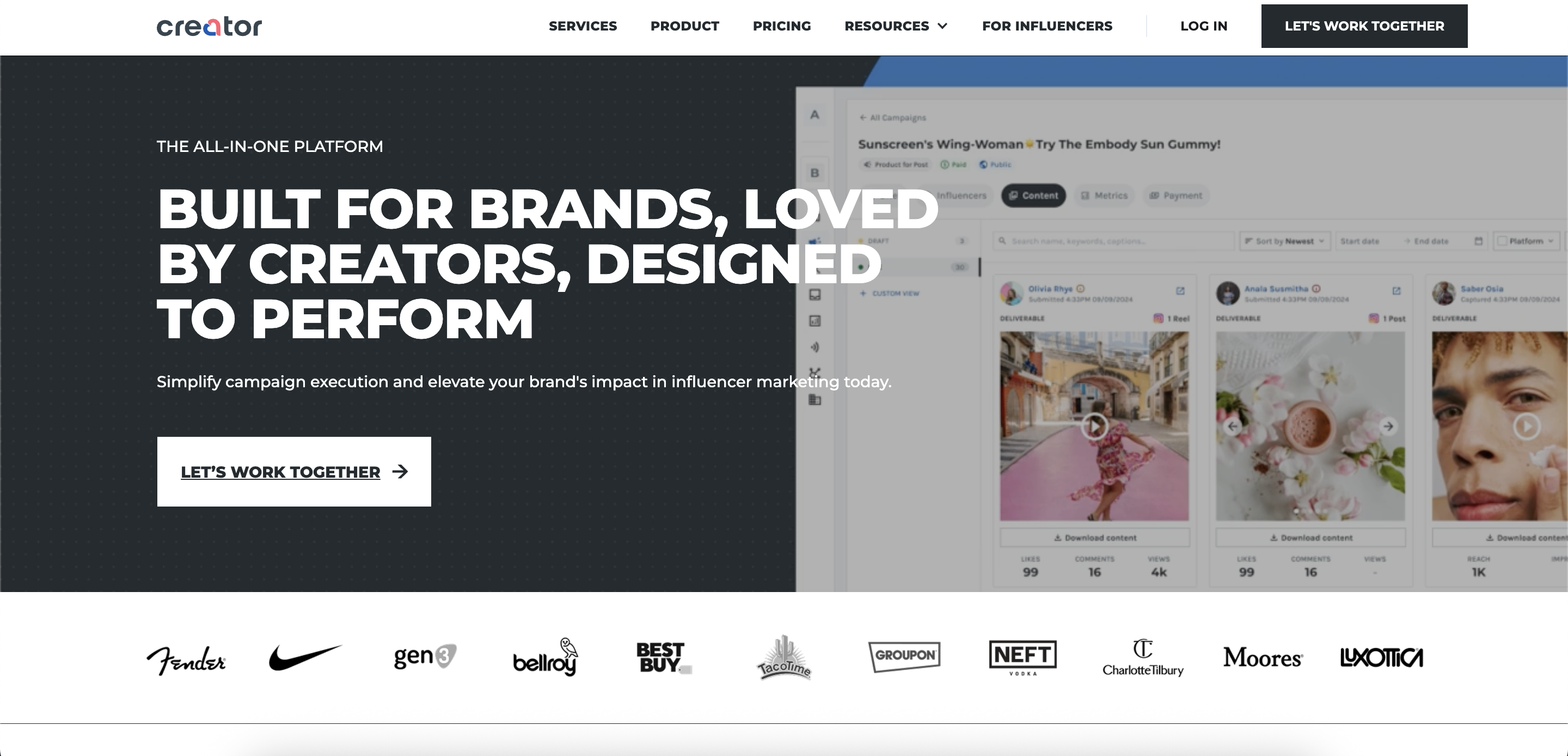 Creator.co focuses on making influencer collaborations easier to set up and manage, especially for small and mid-sized teams. With over 250 million influencer profiles across Instagram, TikTok, and YouTube, brands can search and filter creators by niche, demographics, and engagement. The platform’s scoring system also helps identify influencers most relevant to your launch, reducing the guesswork in outreach.
Campaigns are guided step by step with built-in tools for compensation, deliverables, and content approvals, all displayed in one dashboard. Beyond discovery and management, Creator.co supports affiliate programs, promo codes, and automated payments, tying influencer activity directly to measurable sales. For teams that want user-generated content to repurpose across channels, the platform also manages rights and scheduling, keeping everything centralized for consistent branding during a launch.
Important Features: 250M+ influencer database, influencer scoring, campaign builder, UGC management, affiliate tools, e-commerce integrations, automated payments, reporting dashboards.
Pricing: Starts from $460/month.
Free Trial: No free trial, demo available.
What This Means for Marketers
Launching a product is a moment that leaves little room for error. Influencers can make these campaigns faster, more credible, and more engaging, but the real difference comes when brands use platforms to manage every moving piece. From discovery to reporting, the right platform makes a launch more predictable and more measurable.
Here are a few actionable insights to keep in mind:
Match your goals with the platform’s strengths. A startup might value affordable discovery and gifting, while an enterprise may need enterprise-level analytics and relationship tracking.
Don’t overlook authenticity. Choose platforms that help filter out fake engagement and highlight influencers who already connect with your type of audience.
Think beyond launch day. Use the platform’s tools for seeding, content libraries, and relationship management to keep momentum going after the first wave of attention.
Measure what's important. Real-time analytics and automated reporting are your best allies in showing stakeholders what worked and what needs adjustment for the next launch.
Marketers who treat influencer platforms as a strategic partner will be in the best position to make launches stick. The question now is: which of these platforms fits your brand’s needs, and how soon will you bring it into your launch strategy?