
Brands often look for specific or niche influencers because they speak directly to well-defined communities. These creators share the same interests, challenges, or lifestyles as their audience, which helps build trust. While their audiences may be smaller, they are often more engaged and responsive.
Compared to more general influencers, specific creators tend to:
attract audiences that are genuinely interested in the topic,
generate higher engagement because followers relate closely to their content,
influence purchasing decisions faster, as their recommendations feel more personal and credible.
The main challenge is visibility. Niche influencers rarely appear in broad searches or trending lists. As a result, brands and agencies need to combine several approaches, including platform search, influencer tools, and community research, to find them.
In this guide, we walk through a clear, step-by-step process for finding specific influencers based on detailed requirements. If your goal is to move from a clear brief to a reliable shortlist, this article will help you do exactly that.
“Smart brands are starting to look in places that aren’t overcrowded. When you step outside the usual categories, you often find creators with loyal audiences who actually take time to interact. Real growth usually happens there, in small and passionate communities.”

Mikhail Grigoriev
Head of Content at HypeAuditor
Steps to find a specific influencer
Finding a specific influencer works best when you have a set of steps. If you’re not a fan of jumping between platforms and tools, start with specific requirements and move step by step toward a shortlist. Each step helps you reduce options in a practical way and keeps the search focused on creators who actually fit your criteria.
Step 1: Turn your requirements into searchable criteria
Before you start searching, translate your brief into things you can search for. Well-defined search criteria save time and prevent you from reviewing creators who were never a good fit to begin with.
Focus on three main groups:
Niche and topic terms
Use words a creator would naturally include in their bio, captions, or videos. Go beyond broad categories. For example:
“vegan nutrition” instead of “health”
“home workouts for beginners” instead of “fitness”
“budget travel in Europe” instead of “travel”
Audience and location clues
Look for details that show who the content is made for, not just where the creator lives. This can include:
Language used in captions and videos
Mentions of cities, countries, or local experiences
References to local brands, stores, or events
Content and experience indicators
Identify search terms linked to past collaborations, formats, or problems the creator addresses:
Product types they review or use regularly
Formats such as tutorials, reviews, or day-in-the-life videos
Repeated themes that match your campaign goal
Once these criteria are clear, every search method becomes more effective because you are actively looking for creators who match a defined profile.
Step 2: Start with native platform search (Instagram, TikTok, YouTube)
Native platform search is the fastest way to build an initial list, especially when your criteria are clear. Start with keywords in usernames and bios. These tend to be more accurate than hashtags because creators use them to describe who they are and what they focus on. Searching for terms like “running coach,” “book reviewer,” or “clean beauty creator” often brings up more relevant profiles than broad topic tags.
Hashtags are still useful, but they work best for narrow niches. Look for specific, problem-based, or format-based hashtags rather than large category ones. Broad hashtags usually surface popular content first, which can make it harder to find smaller or more specialized creators. When using hashtags, focus on recent posts to see who is actively creating content in that niche.
Explore pages and For You feeds can also help if used intentionally. Engage with content that closely matches your criteria. Like, save, and follow relevant creators, and interact with similar posts. Over time, the platform will start showing more creators from that niche, which makes discovery easier.
Finally, use shortcuts you already have. Check brand mentions, tagged posts, and creators who follow your brand account. These are often warm leads who already know the brand or create relevant content.
Step 3: Mine competitor and adjacent-brand partnerships
Looking at who your competitors work with is one of the most reliable ways to find relevant creators. If a creator has already partnered with a competing brand, there is a strong chance they reach the same audience you are targeting. Start by reviewing sponsored posts, campaign hashtags, and tagged content on competitor profiles.
Adjacent brands are just as valuable. These are brands that target a similar audience but sell a different product. For example, a fitness apparel brand might look at supplement companies, fitness apps, or wellness platforms. Creators who work with these brands often fit the audience profile without being direct competitors.
When reviewing these partnerships, pay attention to how often a creator works with similar brands and how their audience responds. This helps you avoid creators who feel overexposed in one category.
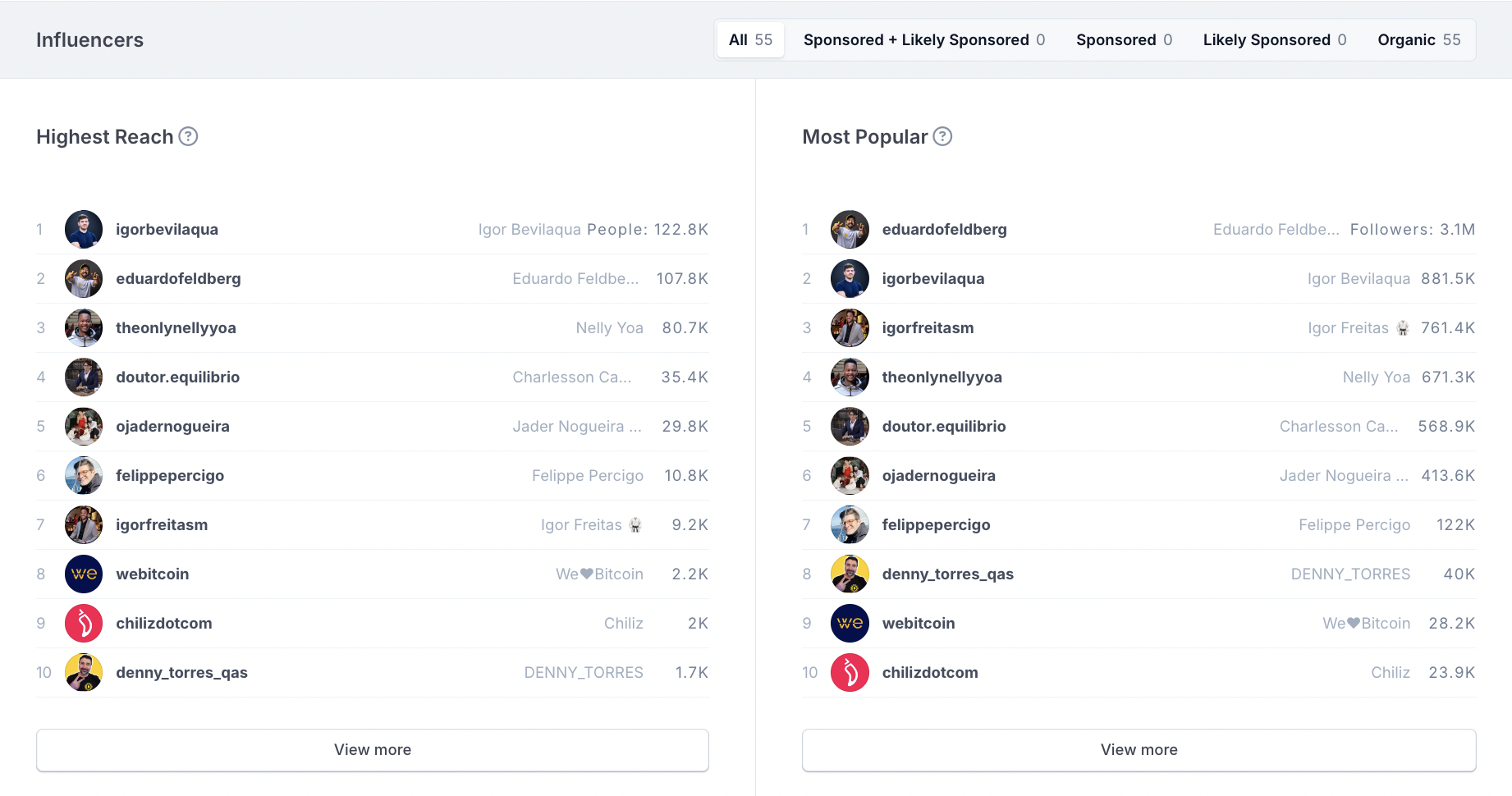 For more convenience, competitor analysis tools can speed up this process by showing which creators frequently collaborate with certain brands. HypeAuditor offers this function, along with several market and competitor analysis tools you can use depending on your needs.
Step 4: Use Google to find creators that platform search misses
Google is a useful simple tool when platform search does not return enough relevant results. It helps find creators who rank well outside social feeds, such as bloggers, YouTubers, or Instagram creators with strong profiles but lower visibility in hashtag searches.
Start with simple searches that combine platform names with your search terms. For example, you can search for Instagram or TikTok creators by niche, location, or content type. Adding words like “review,” “tutorial,” or “creator” can help narrow results. For more specific searches, use Google search features like limiting results to a specific platform or searching for exact phrases.
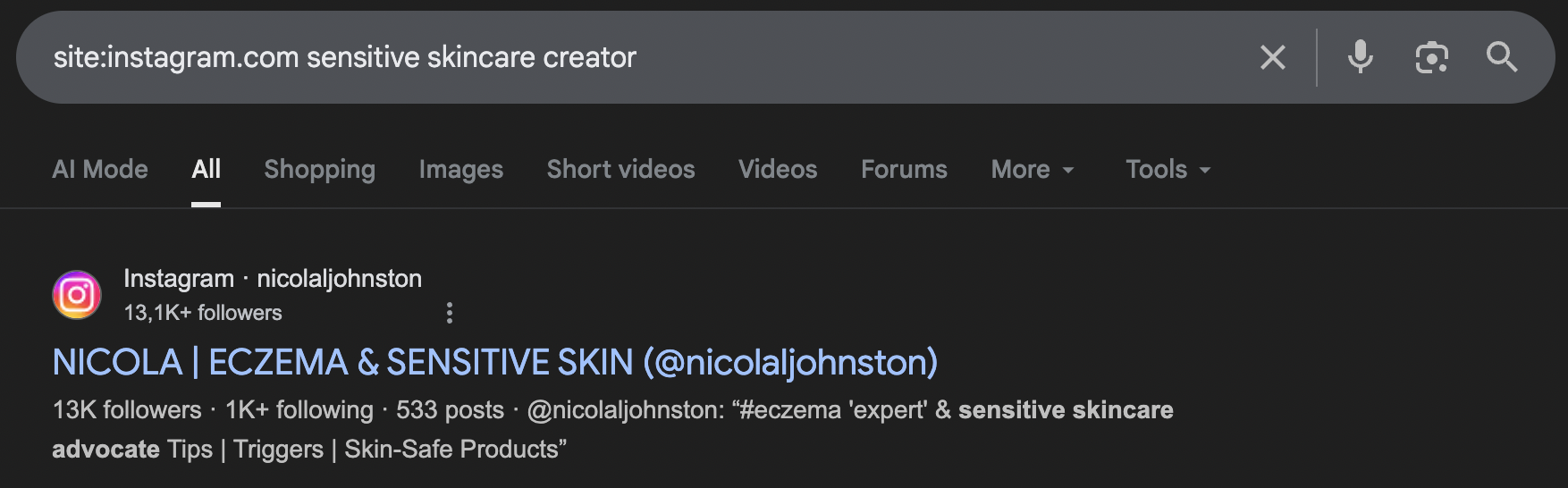 Google works best for edge cases. This includes local creators, bilingual creators, or experts who create content regularly but do not rely on trending formats. The downside is that results often lean toward larger or more established creators, so you may need to scroll deeper or refine your queries to find smaller profiles.
Pro Tip: Use Google as a supplement/complementary instead of a single method. It is most effective when combined with platform search and creator databases.
Step 5: Look for creators in niche communities
Niche communities are a strong source of creators with focused audiences and high trust. These spaces attract people who particularly care about a topic and typically create content based on real experience, sometimes enriched with trends.
You can find these communities on platforms such as Reddit, Facebook Groups, Discord servers, and industry-specific forums. When reviewing activity inside these spaces, look for members who show clear signs of content creation, such as:
Sharing advice or detailed answers on a regular basis
Posting original content or resources
Linking to their Instagram, TikTok, YouTube, or blog profiles
Being referenced or recommended by other members
Once you identify potential creators, review their social profiles carefully. Focus on consistency, relevance, and how closely their content matches the topic of the community. A strong presence in a niche group often translates into higher trust with their audience.
Community-based discovery takes more time than platform search, but it can help you find creators who are highly aligned with your niche and harder to find elsewhere.
Step 6: Use AI to speed up ideas
AI can help you move faster at the idea stage, especially when you are not sure how creators describe themselves or which adjacent niches to explore. It works best as a support tool for generating options, not as a way to make final decisions.
You can use AI to expand your thinking in three main areas:
Search terms and keywords
AI can help you list alternative ways creators might describe their niche, role, or content focus.
Example prompt: “List common words and phrases Instagram creators use to describe themselves if they create content about sustainable fashion for women in their 20s.”
Adjacent niches
AI is useful for spotting related topics that attract a similar audience but may not be obvious at first.
Example prompt: "What creator niches attract the same audience as home workout content but focus on different topics?”
Creator archetypes
AI can help you define types of creators to look for, which makes searching and filtering easier.
Example prompt: “Describe different types of TikTok creators who influence skincare buying decisions, including content style and audience focus.”
One thing you have to remember is, always treat AI output as a starting point. The suggestions still need to be checked against real profiles, audience data, and content history. AI can help you explore faster, but human review is essential before shortlisting or outreach.
Step 7: Use an influencer discovery platform for precise filtering
When your requirements are detailed, an influencer discovery platform becomes important. It allows you to search above surface-level profile information and narrow results using multiple criteria at once.
You can start with keyword-based search. Look for influencers who mention relevant terms in their bios, captions, hashtags, or past brand mentions. This helps you find creators who consistently talk about a topic, not just those who used a keyword once. From there, apply filters gradually rather than all at once.
A practical filter order looks like this:
Platform and influencer tier
Primary niche or keywords
Audience location and language
Audience demographics such as age and gender
Engagement or activity filters
This approach keeps your result pool healthy and prevents over-filtering early. If results drop too quickly, relax secondary filters first, not core requirements.
Many advanced influencer discovery tools like HypeAuditor also support contextual or AI-based search. This is useful when influencers do not label themselves clearly but produce relevant content consistently. For example, an influencer may not mention “running coach” in their bio but regularly posts training plans and race preparation videos.
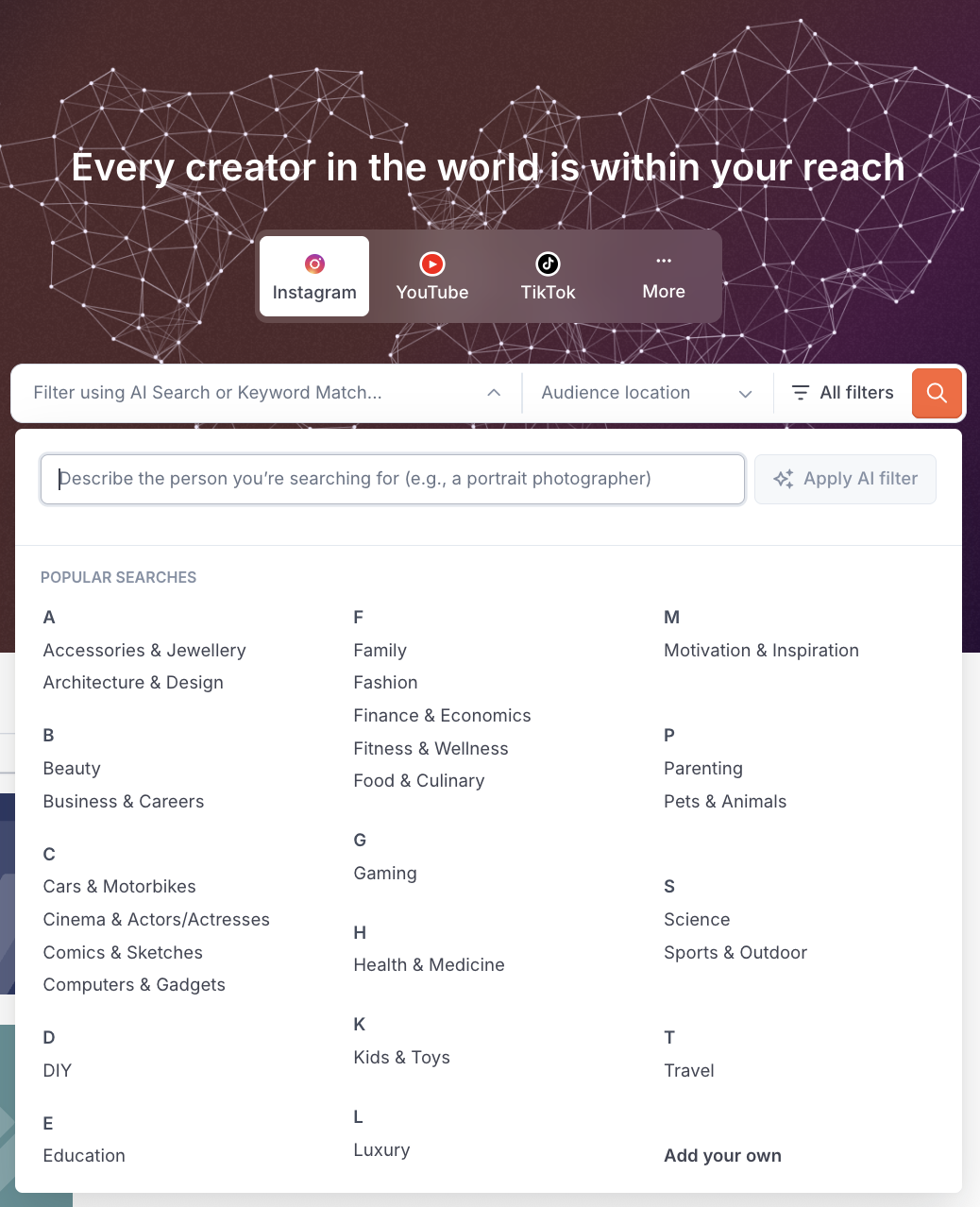 Influencer discovery platforms work best when combined with manual review. So, use them to narrow your list, then review profiles individually to confirm content fit and audience relevance before moving forward.
Step 8: Validate and shortlist influencers before outreach
Before reaching out, confirm that each influencer on your list actually fits your campaign. This step helps you avoid inaccurate matches and makes your final selection easier to justify.
Review the following areas carefully:
Content relevance
Check recent posts and videos to confirm the influencer is still focused on the niche you are targeting. Look for consistency in topics, formats, and messaging over the past few months.
Audience fit
Review audience location, age range, gender split, and language. An influencer can have strong content but still be a poor fit if their audience does not match your target market.
Engagement quality
Look beyond like counts. Read comments to see whether followers ask questions, share opinions, or show real interest. This often reflects trust and attention more accurately than engagement rates alone.
Brand safety
Scan recent content for tone, topics, and opinions that could conflict with your brand values. This includes sensitive themes, aggressive messaging, or frequent promotion of unrelated products.
Collaboration history
Review past partnerships to see how often the influencer works with similar brands. Repeated promotions in the same category may reduce impact and audience trust.
Once validation is complete, create a shortlist and score influencers using the same criteria. A simple scoring system helps keep decisions consistent and supports a smoother outreach process.
Pro Tip: Use the HypeAuditor influencer report to instantly access important data across different areas, as mentioned above. By analyzing a single report, you can decide whether an influencer is a good fit and has the “it factor” you’re looking for.
Common mistakes when looking for specific influencers
Unfortunately, a clear brief doesn’t guarantee that you’re doing it right. You can still make small mistakes that limit your results or lead to poor matches. Being aware of these issues can save time and prevent unnecessary back and forth:
Over-filtering too early
Applying too many strict filters at once often leads to zero results. Start broad and narrow your search step by step.Confusing creator location with audience location
Where an influencer lives is not always where their audience is. Always check audience data, not just profile location.Relying on niche labels instead of real content
Self-described niches in bios can be vague or outdated. Review actual posts to see what the influencer regularly creates.Skipping recent content checks
Influencers change focus over time. Content from six months ago may not reflect what they post today.
Conclusion
Finding a specific influencer is easier when you approach it as a clear process. Start with a detailed brief, define what you are looking for, and use different combinations of platforms, tools, and research methods to build your list. Also, don’t hesitate to take time for reviewing content and audience data before outreach. Accuracy matters more than speed.
If you follow the steps outlined in this guide, influencer discovery becomes easier to manage and easier to repeat. Stay flexible, adjust your criteria when needed, and learn from each search. With the right structure in place, finding the right influencer becomes a repeatable and rewarding part of your workflow.