
Finding influencers is no longer the hard part for many brands. Their content shows up everywhere, and it takes very little effort to stumble across new profiles on any platform. What’s become more challenging is figuring out which influencers you can actually trust with your brand, your message, and your budget.
Brands need trusted influencers because attention alone isn’t enough. A creator can look polished and popular, but if their audience doesn’t care, doesn’t engage, or doesn’t believe what they’re saying, the campaign goes nowhere. Trust shows up in how people respond, how conversations happen, and whether the creator has earned their place in a specific space over time.
Then, how do you know whether an influencer is trustworthy or just looks the part? Before you even start searching, it helps to understand what trust looks like in influencer marketing and which signals are worth paying attention to. That’s what we’ll cover first.
From there, we’ll move into a set of curated ways to find trusted influencers. Because the reality is, trusted creators don’t appear randomly. They tend to show up through specific paths, and knowing where to look makes the process much easier.
Trust indicator in the influencer discovery and selection process
When brands talk about “trusted influencers,” they’re usually reacting to past mistakes. An influencer felt like the right choice at first, delivered the content, but it wasn’t enough to trigger the audience to interact or do certain actions. Trust in influencer marketing is not a vague quality. It shows up through a small set of clear indicators you can check during discovery and selection.
Below are the important trust indicators marketers should pay attention to when shortlisting influencers:
Audience quality
This indicator looks past follower count and focuses on whether an influencer’s audience is made up of real, active people who can actually see and respond to content. A trusted influencer tends to have an audience that behaves naturally, engages in context, and grows realistically over time.
At the end of the day, this indicator answers one simple question: are there real people behind the numbers, and do they pay attention?
Credibility
Credibility builds over time. Trusted influencers tend to talk about the same topic again and again, and they do it with ease. Their content shows familiarity with the subject, and their audience treats them like a reference point, not just someone passing through a trend.
A good place to look is the comments. When followers ask detailed questions or mention past posts, it’s often a sign that the creator is seen as someone who actually knows the space.
This indicator helps you understand whether a creator holds attention in a meaningful way, or if they are just one voice among many talking about the same thing.
Brand safety and integrity
Brand safety and integrity are about who you’re standing next to as a brand. This indicator looks at a creator’s past behavior, values, and partnership choices, and whether those align with how your brand wants to be perceived. It includes the tone they use, the topics they avoid or lean into, and the types of brands they’ve promoted before.
This check helps you avoid reputational risk. Even strong performance doesn’t help if a creator’s history or messaging puts your brand in an uncomfortable position.
Reliability
Reliability is about how the work gets done. It focuses on whether a creator shows up on time, posts regularly, follows briefs, and communicates clearly during a campaign. You can often spot this through posting cadence, campaign history, and how structured their sponsored content looks.
This indicator helps you predict whether a collaboration will run smoothly once it starts.
To make things easier, the table below shows what to look for with each indicator and what to watch out for:
| Indicator | Look for | Watch out for |
|---|---|---|
| Audience quality | Engagement patterns, comment relevance, follower growth over time | Low interaction, generic comments, sudden growth that doesn’t match content |
| Credibility | Topic focus across recent posts and how followers interact | The niche appears only occasionally, audience treats content casually |
| Brand safety & integrity | Past partnerships, tone, disclosures, overall posting history | Conflicting brand promotions, unclear disclosures, unpredictable messaging |
| Reliability | Posting rhythm and visible campaign history | Long posting gaps, irregular sponsored content, abandoned partnerships |
Curated ways to find trusted influencers
Finding trusted influencers rarely works when you rely on random discovery methods or cast a wide net. Trust tends to show up through familiar paths, creators who already have some connection to a brand, a niche, or a specific audience. That’s why it makes more sense to focus on methods that point you toward warmer leads, where credibility and experience already exist.
The approaches below are selected because they tend to point you toward creators who already have credibility, experience, or real audience relationships. You don’t need to use all of them. Choose the methods that match how your team works, what your brand needs right now, and what fits your budget and resources.
1. Start with people who already trust you
One of the most overlooked sources of trusted influencers is your own community. This includes customers who post about your product, creators who tag your brand in Stories, and fans who regularly share user-generated content. These people already understand what you do and often speak about it naturally.
You can find them by reviewing tagged posts, Story mentions, comments, and repeat UGC contributors. Look for people who post consistently and spark real conversations, not just likes.
This approach works well for community-led brands, retail businesses, and subscription models.
Downside: Not everyone who likes your brand is a creator, and not every creator is ready for a campaign. You’ll still need to vet for content quality and audience fit.
2. Find creators the market already works with
Creators who collaborate repeatedly with similar brands tend to know how partnerships work. They understand expectations, timelines, and how to integrate products into content without it feeling forced. Seeing the same creator appear across peer brands or competitors is often a sign of experience and reliability.
To find them, review competitor and peer brand profiles, paying attention to tagged posts, mentions, and past collaborations. Creators who show up more than once are usually worth a closer look.
This method is useful when you’re entering a new niche or need creators who can deliver with minimal onboarding.
Downside: Some creators may be overused or tied to competitors. You may need a clear angle or decide when it’s better to look elsewhere.
3. Look for “teacher” behavior
Many trusted influencers earn attention by helping their audience learn or solve problems. These creators focus on explaining, demonstrating, or breaking down topics within a niche, and their audience often treats them as a reference point.
You can spot this by searching for niche-specific questions or problems on platforms like Instagram, TikTok, and YouTube. Strong signals often appear in the comments, where followers ask detailed questions or follow up on advice.
This works well for high-consideration products, technical niches, and education-heavy categories.
Downside: Expert content doesn’t always mean the audience matches your target market. Audience checks still matter before moving forward.
4. Use influencer discovery tools with the right filters
Influencer discovery tools are useful when you need a lot of options, but trust comes from how you narrow the search. Looking for creators by niche terms and then applying filters related to audience quality and engagement helps find profiles with more reliable audience behavior.
Search using niche-related keywords, then refine results using indicators tied to audience authenticity and interaction. Tools like HypeAuditor are designed to support this kind of screening before partnerships.
This approach works well when you need a larger pool of creators and want consistency in how they’re evaluated.
Downside: No tool captures every creator. Very new or early-stage profiles may not appear yet.
5. Use lookalikes from your most trusted influencers
When a creator performs well, their profile can act as a reference point. Lookalike searches help you find creators with similar audience makeup, content style, and performance patterns, which can reduce uncertainty during expansion.
Start with one to three creators you already trust, generate similar profiles, and then apply the same trust check before shortlisting.
This method is useful when you want to grow a campaign while keeping a similar tone and audience type.
Downside: Results can feel repetitive. Therefore, adding creators from other methods helps keep variety.
6. Monitor creators already talking about you or your niche
Accounts that mention your brand, product, or niche without being prompted often do so because it fits their content and audience. These organic mentions can be a strong starting point for trusted partnerships.
Search for your brand name, product name, and niche-related terms across platforms. Shortlist creators who post reviews, tutorials, or opinions that don’t look sponsored.
This works best when your brand already has some visibility or conversation around it.
Downside: Some mentions are driven by affiliate links or trends. Therefore, you need to treat them as leads and vet them carefully.
How to verify credibility before the agreement
Before you commit a budget or sign an agreement, it’s important to confirm that a creator actually meets the trust indicators you’ve shortlisted them for. There are three practical ways to prove it:
1. Use an influencer report
The most reliable option is to review an influencer report that brings audience quality, authenticity, and performance data into one place. With tools like HypeAuditor, you can see key indicators such as audience authenticity, engagement patterns, follower growth, and recent performance without relying on assumptions or manual checks.
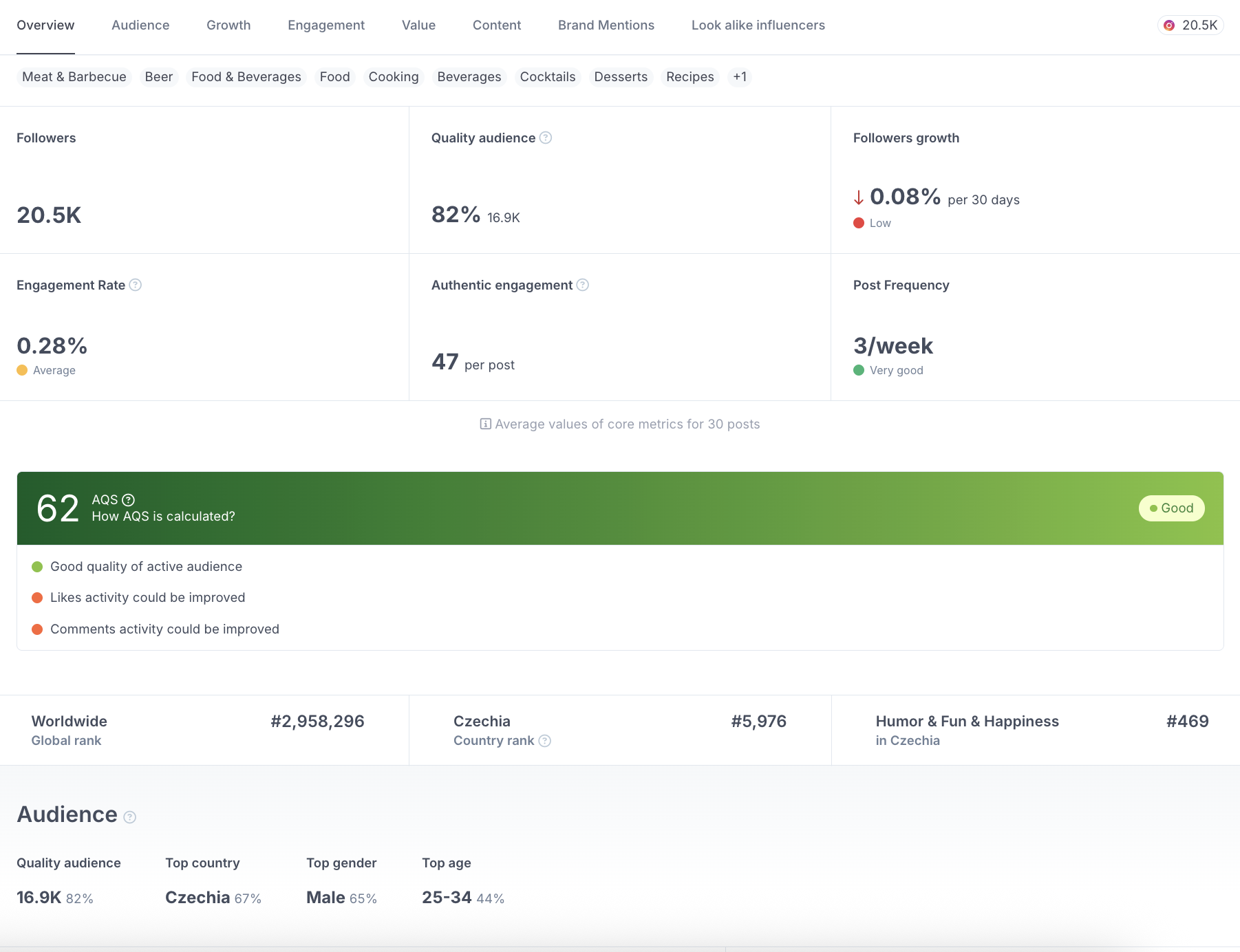 This approach works well when you’re managing multiple creators or need a consistent way to verify credibility across a shortlist.
2. Ask for native analytics screenshots
If you don’t have access to third-party analytics tools, asking creators for screenshots from their native platform analytics is a common and accepted practice. You can request top audience locations along with reach or views from the last 30 days to understand who they are actually reaching and how their content is performing recently.
This method takes a bit more coordination but still provides direct insight from the creator’s own data.
3. Run a manual check
When no audience data is available, a manual review can act as a basic fallback. Look at comment quality, follower profiles, and recent engagement to see whether interactions feel natural and relevant to the niche. Sampling a small group of commenters can help flag things that don’t line up.
Remember, this method works best as a supporting check alongside real data. When credibility is critical, audience and performance data should remain the final reference.
Wrapping up
Finding trusted influencers usually comes from paying attention to patterns over time. The influencers worth working with tend to show up in familiar places, talk about the same topics regularly, and attract audiences that respond naturally. When you take a moment to check for trust before moving ahead, campaigns tend to run more smoothly and with fewer surprises.
As you put this into practice, a few habits can help:
Start with warmer paths such as customers, repeat collaborators, or creators already active in your niche.
Look for topic focus and audience interaction that shows up across multiple posts, rather than a single standout moment.
Apply the same trust checks to every shortlist, even when an influencer seems promising early on
At the end of the day, trusted influencer partnerships are built step by step. Taking the time to verify credibility and choose the right paths makes it easier to work with creators you can rely on, communicate with, and build on over time.